Health & Wellness
At-Home Dog Dental Care and Why It Matters
Why dog dental care matters and how to do it at home, from toothbrushing to chews, plus the signs of dental disease worth a vet visit.
Most dogs have some degree of gum disease by the time they're three years old. Dog dental care is one of those things owners hear about at every wellness visit but rarely act on, not because they don't care, but because it seems hard to start. It's not, once you know the routine.
Why teeth matter more than you might think
Bacteria build up on teeth within hours of eating. Over a few days, that soft plaque hardens into tartar, the yellowish-brown crust you see along the gumline, especially on the back molars. Tartar itself doesn't brush off. It requires a professional cleaning under anesthesia to remove, and if it's left there long enough, the gums pull away from the teeth, bone loss follows, and teeth eventually loosen.
That process is painful. Dogs are good at hiding mouth pain; many owners only realize something was wrong once a tooth is extracted and the dog starts acting noticeably brighter.
There's also a circulation angle. The mouth is heavily vascularized, and chronic gum infection gives bacteria a direct path to the bloodstream. The evidence linking periodontal disease to heart, kidney, and liver changes in dogs is not ironclad, but it's consistent enough that most vets take it seriously. Whether or not it shortens lives, untreated dental disease clearly affects quality of life.
Building a brushing routine
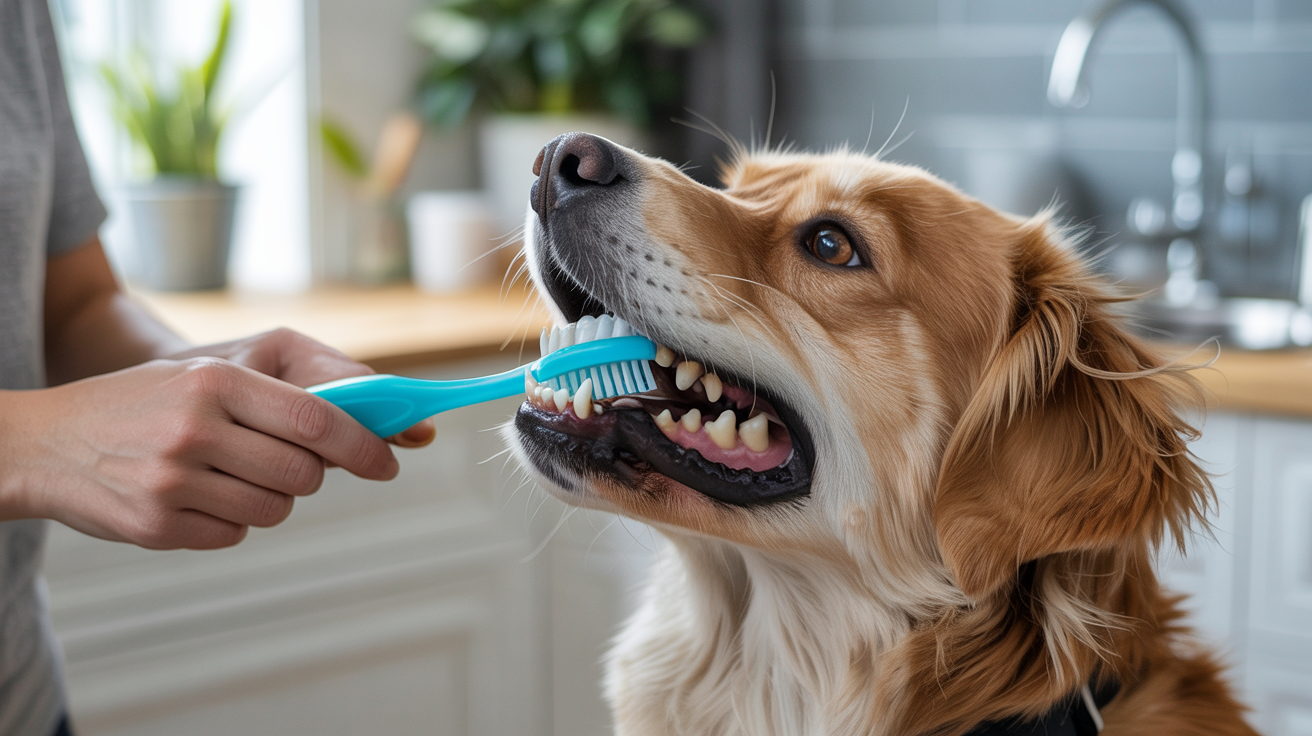
Brushing dog teeth is the single most effective home intervention. Plaque is soft and mechanical removal, actual bristle contact on the tooth surface, is what prevents it from hardening.
You need:
- A soft-bristle brush sized for your dog (finger brushes work for small dogs; a long-handled toothbrush reaches the back teeth of large breeds better)
- Dog toothpaste in a flavor they'll accept (poultry, peanut butter, and vanilla mint are common options; choose one with enzymatic action if possible)
- A place your dog feels settled, on a couch, on the floor, wherever they're calm
Never use human toothpaste. The fluoride concentration and foaming agents are meant to be spit out; dogs swallow whatever you put in their mouths.
Starting from scratch
If your dog has never had their teeth touched, don't start with the brush. Spend a few days letting them lick toothpaste off your finger. Then graduate to rubbing your finger along the gumline. Then introduce the brush with no paste, just letting them sniff and mouth it. Once they're comfortable, combine paste and brush.
Go slowly along the outer surfaces of the teeth, the tongue side gets some cleaning from saliva and the rough surface of the tongue itself, so the outer faces are the priority. Aim for 30 to 60 seconds total. Reward with a piece of kibble, a bit of play, or whatever your dog values.
How often
Daily brushing produces the best results. Plaque starts mineralizing into tartar around 72 hours after it forms, so three times a week is a reasonable minimum if daily isn't realistic.
| Frequency | Plaque control | Realistic for most owners? |
|---|---|---|
| Daily | Best | Doable once it's a habit |
| 3x per week | Good | Yes |
| Weekly | Minimal benefit | Not enough for most dogs |
| Never | None | High tartar risk by age 3 |
Dental chews and water additives
Brushing is the gold standard, but it's not the only tool. Dental chews work through a combination of mechanical abrasion (the chewing action scrubs surfaces) and sometimes enzymatic or antimicrobial ingredients. They're not a substitute for brushing, they don't reach the gumline effectively, but they help on off days or as a supplement.
Look for products with the Veterinary Oral Health Council (VOHC) seal. That seal means the product has been tested and shown to reduce plaque or tartar by at least 10%. It's not a high bar, but it's the only independent verification that exists in this market. Many chews and treats don't have it.
A few things to watch:
- Size matters. Give a chew sized for your dog's weight. A toy breed chewing a large Greenie can break a tooth on the hard center core.
- Rawhide isn't a dental chew. It softens quickly and doesn't provide much abrasion. It also poses a choking risk if swallowed in chunks.
- Antlers and hard nylon bones are too hard. "If you wouldn't hit your kneecap with it, don't give it to your dog" is the rule of thumb vets often use. Slab fractures (broken carnassial teeth) are common in dogs given very hard chews.
- Calories count. If your dog gets a large chew daily, factor it into their food intake.
Water additives are a lower-effort option, you add a liquid to the water bowl and they reduce bacteria in the mouth. Evidence for them is modest but they're harmless and easy, so worth adding if you're already motivated.
Recognizing the signs of a problem
Dogs with dental disease don't usually cry or paw at their mouths. The signs are subtler. Watch for:
- Bad breath that's noticeably worse than usual (some "dog breath" is normal; a sour or rotten smell is not)
- Dropping food or chewing on one side
- Reluctance to chew toys they previously enjoyed
- Swelling below one eye (often a sign of a carnassial tooth abscess)
- Visible tartar, that dark yellow-brown buildup along the gumline
- Bleeding or red, puffy gums when you look in the mouth
If you notice any of these, it's worth a vet visit rather than waiting for the next routine appointment. Dental infections can escalate quickly, and what looks like a minor gum issue can turn out to be a tooth that needs extraction. For a broader checklist of symptoms worth acting on promptly, this guide to signs your dog needs to see the vet is a useful reference.
Professional cleanings and when to schedule them
A professional dental cleaning (a COHAT, comprehensive oral health assessment and treatment) requires general anesthesia. That puts some owners off, but anesthesia-free dental cleanings, offered at some groomers and pet stores, only address visible scale on the crown. They don't allow probing below the gumline, where most disease actually lives, and they can stress the dog considerably.
How often a dog needs a professional cleaning depends heavily on breed, individual plaque rate, and home care. Small breeds, Chihuahuas, Yorkies, Dachshunds, Maltese, tend to have crowded teeth in smaller jaws and often need cleanings every one to two years starting around age two. Large breeds with well-spaced teeth and good home care might go three to four years between cleanings.
Your vet will stage any disease found during a cleaning using the same four-point scale used in human dentistry:
- Stage 1: gingivitis only (reversible)
- Stage 2: early bone loss (less than 25%)
- Stage 3: moderate bone loss (25-50%)
- Stage 4: severe bone loss (over 50%, teeth often need extraction)
The difference between stage 1 and stage 4 is usually years, not months. Starting home care early keeps most dogs at stage 1 or 2 for a long time.
Dental health fits into the same overall preventive picture as staying current on vaccines, see the rundown on the core vaccines every dog needs, and parasite prevention, which is covered in this overview of flea and tick prevention that actually works.
Frequently asked questions
Can I use a regular toothbrush on my dog?
A soft-bristle human toothbrush works fine, especially for medium to large dogs. The bristles are gentle enough not to damage gums, and the shape lets you reach the back molars. For small dogs, a finger brush often gives more control. The brush matters less than the technique, you want the bristles angled slightly toward the gumline and moving in small circles or gentle back-and-forth strokes.
My dog hates having their mouth touched. Is there any point?
Yes, but take it slowly. Most dogs that hate tooth brushing had it introduced too fast or had a bad early experience. Go back to the basics, finger, then paste on finger, then brush with no paste, and keep sessions under a minute. Pairing it with something the dog genuinely enjoys (a lick mat, a treat immediately after) helps a lot. Even once or twice a week is better than nothing, and many dogs who resist at first become tolerant once it's a predictable part of the routine.
At what age should I start?
As early as possible. Puppies have baby teeth from about three to seven weeks old, and starting mouth handling early makes adult dogs far more accepting. You don't need to brush baby teeth aggressively, the point is habituation. Adult teeth come in between three and seven months, and that's when consistent brushing really matters.
Do dental chews actually work?
Some do, with limits. The VOHC-approved ones have published data showing plaque or tartar reduction, but the effect is modest compared to brushing. Think of them as a supplement rather than a replacement. They're most useful on days you can't brush, or for dogs that won't tolerate a brush at all.
How do I know if my dog's mouth is healthy without a vet visit?
Lift the lip and look at the back upper teeth (the large carnassial molars). If the gumline is pink and the tooth surface looks white to slightly yellow, that's reasonable. Heavy brown or black tartar, red or swollen gums, or any visible recession, where the tooth root starts to show, all warrant a vet check. Smell matters too: persistent bad breath, not just post-meal breath, often signals active bacterial activity below the gumline.