Nutrition & Feeding
Managing Your Dog's Weight and Portion Control
Learn how to tell if your dog is overweight, how to portion meals correctly, and practical steps to help your dog lose weight safely at home.
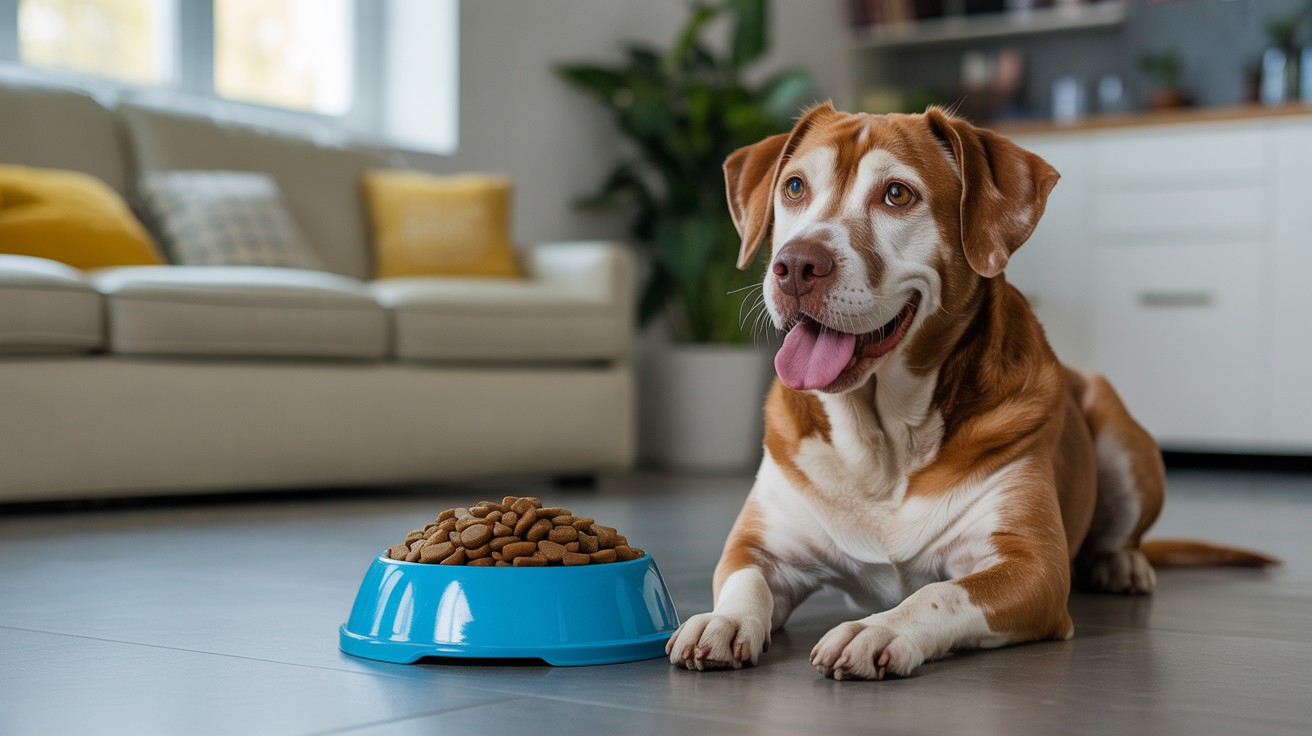
A dog who carries extra weight is at higher risk for joint pain, diabetes, breathing problems, and a shorter life. Yet overweight dogs are common, partly because the signs creep up slowly and partly because the bag's feeding guide is almost always a starting point rather than a precise target. This guide walks through how to assess your dog's body condition at home, how to set a realistic portion, and what to actually do when the scale is creeping in the wrong direction.
How to Tell If Your Dog Is Overweight
The number on a scale tells you something, but it does not tell you much on its own. A Labrador at 70 pounds might be lean or obese depending on their frame. The more useful tool is the body condition score (BCS), a 9-point scale used by vets that you can apply at home by touch and eye.
At a healthy weight (BCS 4-5 out of 9):
- You can feel the ribs easily with light finger pressure, but you cannot see them from across the room.
- There is a visible waist when you look down from above.
- The belly tucks upward when you view the dog from the side.
Signs of an overweight dog (BCS 6-7):
- Ribs are hard to feel without pressing firmly.
- The waist is less defined or absent.
- The belly is level or slightly rounded when viewed from the side.
Signs of obesity (BCS 8-9):
- Ribs are difficult or impossible to feel under a layer of fat.
- No waist visible; the back may appear broadened.
- Fat deposits visible over the hips, base of the tail, and neck.
Run your hands along your dog's ribcage right now. If you press gently and feel nothing but soft padding before reaching bone, that is useful information. Do this check every month and it becomes a reliable habit.
Why the Bag's Feeding Guide Is Just a Starting Point
Every bag of dog food carries a feeding guide, typically listed as cups per day by weight range. Those numbers are calculated to cover a fairly active, unaltered adult dog at the midpoint of each weight bracket. If your dog is spayed or neutered, less active than average, middle-aged, or on the lower end of a weight range, they may need 20 to 30 percent less than the printed recommendation.
Treats add up faster than most owners expect. A single medium biscuit can represent 10 to 15 percent of a small dog's daily calorie budget. Pill pockets, training treats, table scraps, and food-flavored chews all count. If your dog is getting treats throughout the day, the amount of food in the bowl needs to reflect that.
Measuring by volume with a proper measuring cup, rather than scooping loosely with a coffee mug or the food scoop that came with the bag, can make a meaningful difference on its own. An overfilled cup is easy to repeat several times a day without noticing. A kitchen scale is even more accurate if you want to be precise.
For a deeper look at how calorie needs shift across life stages, how much to feed your dog by weight and life stage breaks it down in more detail.
How to Help Your Dog Lose Weight Without Making Mealtimes Miserable
Cutting portions abruptly leaves a food-motivated dog restless and focused on begging. A gradual reduction, typically 10 to 15 percent less than the current amount, gives the digestive system and the dog's habits time to adjust. Recheck weight and body condition every three to four weeks and adjust from there.
A few approaches that tend to work well in practice:
Split the daily portion into more meals. Instead of one large meal or two average-sized ones, divide the same total amount into three or four smaller servings. The dog feels fed more often, which reduces between-meal pestering, without actually increasing calories.
Swap high-calorie treats for lower-calorie ones. Plain cooked green beans, carrot sticks, and cucumber slices satisfy the urge to hand something over without adding much to the daily total. Baby carrots in particular work well as training rewards. Check with your vet before introducing new foods if your dog has a history of digestive sensitivity.
Add a food topper that adds bulk, not calories. A spoonful of plain pumpkin puree (not pie filling) stirred into the bowl adds fiber and helps a dog feel fuller. It also tends to slow eating down slightly.
Account for every treat in the daily budget. Set aside 10 percent of the day's food portion and use pieces of that as treats rather than adding extras on top.
Weight loss in dogs should be slow and steady, roughly half a percent to one percent of body weight per week. Losing faster than that can be hard on muscle mass and should be done only under veterinary guidance. If your dog has not lost any weight after four to six weeks of genuine portion reduction, a vet visit is the right next step. Underlying conditions like hypothyroidism can slow metabolism significantly.
Reading the Label to Make Better Portion Choices
Two foods that look similar on the shelf can have meaningfully different calorie densities. A cup of one kibble might contain 300 calories while a cup of another contains 420. If you switch foods without adjusting the amount, you may accidentally increase or decrease total calories by more than you intend.
Most bags list the calorie content somewhere on the panel, often in kilocalories per cup (kcal/cup) or per kilogram. This number is the one to compare across foods. If your dog is on a weight-loss plan and you are switching to a lower-calorie option, the transition should be gradual to avoid stomach upset.
How to read a dog food label like a pro walks through the guaranteed analysis, ingredient list, and calorie statement in plain terms if you want a full breakdown.
And if you are making a food change, whether for weight reasons or any other, how to switch dog foods without an upset stomach covers the pacing that keeps the transition smooth.
Keeping the Weight Off Long Term
Once a dog reaches a healthy body condition, the goal shifts to maintenance, which usually means finding a steady portion that holds the ideal BCS without continuous adjustment. This is a number you arrive at through observation over several weeks, not something printed on a bag.
A monthly body condition check takes about thirty seconds. Run the hands over the ribs, look for the waist from above, check the belly tuck from the side. Catching a two-pound creep early is far easier than addressing a ten-pound problem later.
Exercise matters too, but it is less useful than most owners assume for weight loss on its own. An extra twenty-minute walk burns fewer calories than most people expect, and it is easy to offset with a handful of kibble. Exercise is valuable for joint health, mental stimulation, and general condition, but portion management does most of the weight work.
Seasonal changes can shift appetite and activity levels. Many dogs eat more in cold weather and move less when it is very hot. Being willing to nudge portions slightly season to season keeps body condition stable without a major overhaul.
Frequently Asked Questions
How do I know how many calories my dog actually needs? A rough formula often used is to calculate the resting energy requirement (RER), which is approximately 70 multiplied by your dog's body weight in kilograms raised to the 0.75 power. Multiply that by a factor for activity level and life stage, typically 1.4 to 1.8 for most adult pets. Your vet can give you a personalized target, which is worth asking for at the next annual exam.
My dog is always hungry after meals. Does that mean I am underfeeding? Not necessarily. Many dogs are perpetually food-motivated regardless of how much they have eaten. If the BCS check shows a healthy body condition, the portion is probably appropriate. High-fiber additions like plain cooked vegetables can help a dog feel fuller without extra calories.
Can I put my dog on a commercial weight-loss food without talking to my vet first? You can, though a vet visit first is worthwhile if your dog has any other health issues, is significantly obese, or has been on the same food for years. Weight-loss formulas are typically higher in fiber and protein and lower in fat and calories, which suits most healthy overweight dogs, but a vet can flag anything that would make a particular approach less suitable for your individual dog.
My dog lost weight but still seems to have a round belly. Is that normal? A pendulous belly after weight loss can sometimes be loose skin that has not fully retracted, which is common in dogs that were significantly overweight. However, a persistently distended abdomen after weight loss should be checked by a vet, as it can occasionally indicate fluid accumulation or other issues unrelated to fat.
How do treats factor in when I am also using food for training? Break training treats into smaller pieces rather than giving one whole treat per repetition. A pea-sized bit of food tends to reinforce behavior just as effectively as a larger piece. You can also use part of the day's kibble portion as training rewards, which keeps the total daily amount constant.