Training & Behavior
How to Manage Resource Guarding in Dogs Around Food and Toys
Resource guarding in dogs explained: why it happens, mild vs severe warning signs, trade-up exercises that build trust, and when to call a professional.
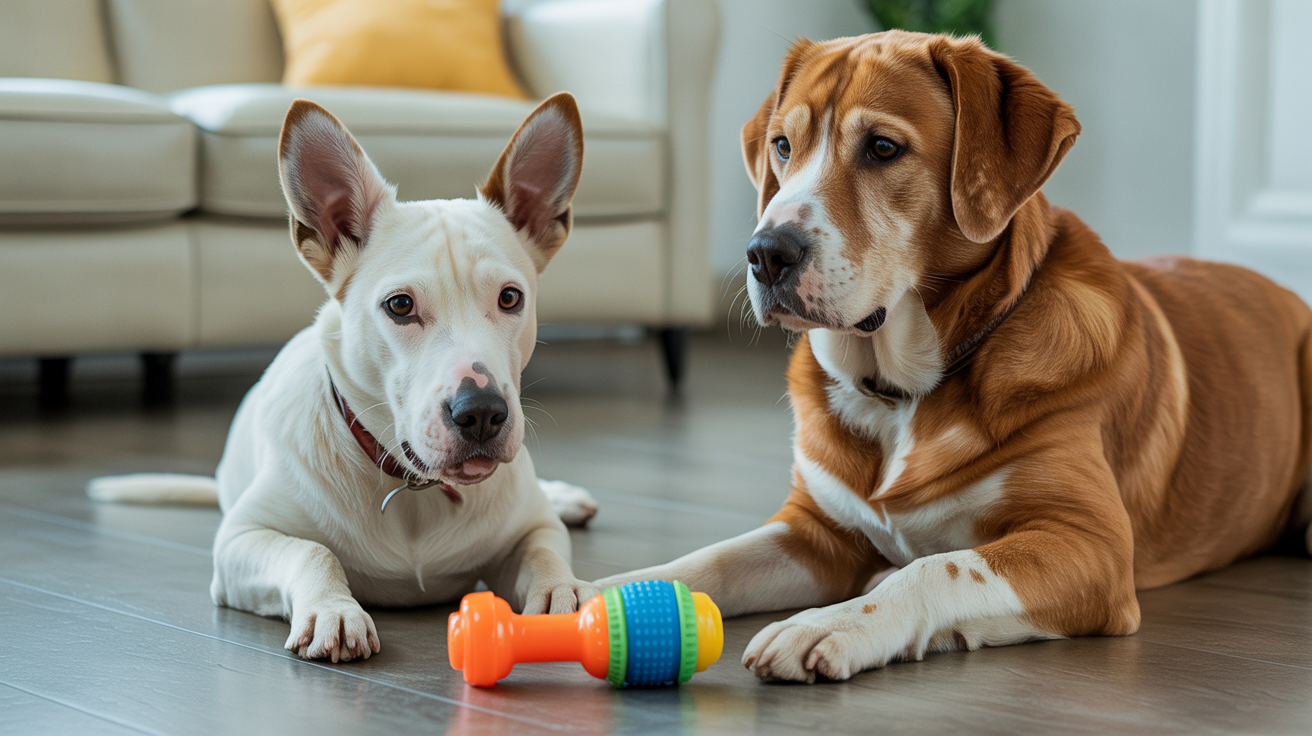
Your dog stiffens over her bowl. He freezes with a rawhide clamped between his paws and locks eyes with you as you walk past. Maybe there has already been a growl, or a snap when someone reached for a toy. This is resource guarding in dogs, one of the most common behavior questions a trainer hears. The reassuring part is that in most cases it is manageable with a clear plan, not proof that your dog is broken or secretly aggressive.
What Resource Guarding Actually Is
Resource guarding is any behavior a dog uses to keep something valuable away from a person or another animal. That "something" can be food, a bone, a stuffed toy, a stolen sock, a favorite napping spot, or even a specific person. Warning signs range from subtle to obvious: a sudden freeze, a hard stare, eating faster, turning the body to block access, a low growl, air snaps, or a bite.
Think of it as a spectrum, not one fixed problem. A dog who eats a little faster when someone walks by is guarding, technically, but the risk is nowhere near a dog who has already bitten over a bone. Dog guarding food aggression is the version most owners meet first, since food bowls are a daily flashpoint, but toys, chews, and a couch cushion trigger the same instinct.
Why Dogs Guard: Instinct, Not Dominance
For a long time, guarding got explained through "dominance," the idea that a dog was trying to outrank the household. That framework has fallen out of favor with trainers for good reason: it does not match how the behavior actually develops, and it pushes owners toward confrontation, which makes guarding worse.
A simpler explanation is that guarding is a survival instinct. Access to food and valuable objects mattered a great deal to a dog's ancestors, and protecting a resource from a competitor is deeply wired in. Some dogs are born with a stronger version of it. Others learn it through experience: a dog who once went hungry, competed with littermates over limited toys, or lived somewhere resources were scarce can come out the other side more protective of what they have.
This matters most with rescue dogs, who often arrive with an unknown history. If you have recently brought home an adult or rescue dog and guarding shows up alongside general nervousness, slow down the whole introduction process. Our guide on how to socialize an adult or rescue dog covers pacing that helps with both, since each improves as the dog learns the household is predictable.
Mild Guarding vs a Bite Risk: How to Tell the Difference
Not every guarding behavior needs the same response. Reading severity accurately is the most useful skill an owner can build here, since it determines whether you work through it at home or bring in a professional right away.
| Signal | Mild guarding | Bite risk, needs professional help |
|---|---|---|
| Body language | Stiffens briefly, eats faster, leans over the item | Frozen, hard stare held for seconds, whale eye (whites of eyes showing) |
| Sound | Occasional low growl, stops once you back away | Growling that escalates as you approach, or no warning sounds at all before snapping |
| Distance sensitivity | Only reacts if you reach directly for the item | Reacts to someone simply walking through the room or making eye contact |
| History | No bites, guarding is new or mild | Has already bitten or broken skin, or guards intensely around children |
| Recovery | Relaxes again within seconds once you move away | Stays tense, follows you, or repeats the behavior even after the item is gone |
If your dog's behavior lines up with the right-hand column, especially anything involving children or a bite history, stop trying to fix it through trial and error. That is a job for a certified trainer or veterinary behaviorist, not a weekend project.
Building Trust: Trade-Up and Hand-Feeding Exercises
For mild to moderate guarding, the goal is simple to state even though it takes patience to apply: teach your dog that a person approaching their stuff predicts something good, not something being taken away.
The trade-up exercise. Approach your dog while they have a low-value item, like a plain toy, and toss a piece of high-value food a short distance away, then walk off while they eat it. You are not touching the item yet, just building "person comes near, good thing appears." Once your dog is relaxed with that, start trading up: offer a treat in exchange for the item, let them see the trade coming, and give it back afterward at least half the time. The point is proving that hands near their stuff means more good stuff shows up, not less.
Hand-feeding for food bowl guarding. For a dog who stiffens over the bowl, drop the routine of filling it and walking off. Instead, sit nearby and hand-deliver a few pieces at a time, tossing extra into the bowl as they eat calmly. Over sessions, set the bowl down with a small amount, approach and add more (never take food away), and build up until your presence predicts a bonus, not a threat.
These exercises work best layered on solid basic obedience: a dog with a reliable "leave it" is easier to manage around a dropped item, and the skills from teaching the core cues: sit, down, stay, and leave it directly support guarding work. If your dog struggles to stay engaged, getting started with clicker training your dog covers marker timing that makes trade-up work easier to teach.
Rushing these exercises, especially grabbing an item outright before your dog trusts the pattern, tends to backfire and increase guarding instead of reducing it.
Everyday Management That Actually Helps
Training changes the underlying instinct over weeks and months. Management prevents incidents in the meantime.
- Feed dogs separately in multi-dog homes. Guarding around other animals is common and often more urgent than guarding around people, since two dogs cannot negotiate the way a person and a dog can. Use separate bowls, separate rooms or crates at mealtime, and pick up bones and long-lasting chews once dogs are done rather than leaving them scattered.
- Never corner a guarding dog. Reaching into a crate, over a dog on a couch, or into a tight space to retrieve an item removes the dog's ability to move away, which pushes many dogs past a growl into a snap.
- Manage the environment around kids. Keep high-value chews and food bowls where children cannot reach them unsupervised, and teach children early that a dog eating or chewing something is not to be approached or stared at.
- Get feeding portions right. A dog who is consistently a little hungry because of an undersized portion can guard more intensely than one on an appropriate diet. Check your dog's portions against how much to feed your dog by weight and life stage if you are unsure.
What Never to Do
The single most damaging response to resource guarding is punishing the growl. A growl is a warning, not the aggression itself, telling you clearly that your dog is uncomfortable and about to escalate if you keep pushing. Punish that warning by yelling, alpha-rolling, or physically correcting the dog, and you do not remove the discomfort behind it. You just teach the dog that growling gets punished, so next time they skip straight to a bite.
Other things to avoid: taking items away "just to show who's boss," staring the dog down, forcing a hand into the bowl before trust is built, and letting kids test the dog near a guarded item. None of these build trust.
When This Needs a Professional, Not a DIY Fix
A dog growling when you approach the bowl for the first time, with no bite history, is reasonable to work on yourself using the steps above. A dog who has already bitten, who guards intensely around children, or whose guarding worsens despite consistent work needs a certified trainer experienced in aggression, or a veterinary behaviorist. This is not a reflection on you as an owner: a bite risk is dangerous to manage through trial and error, and a professional can assess severity in person in a way no article can.
Frequently Asked Questions
Is resource guarding a sign my dog is aggressive?
Not on its own. Guarding is a common instinct, and most dogs show some version of it at a low level. It becomes a genuine aggression concern when it escalates to bites, involves children, or worsens despite training.
Should I take toys and bones away to "practice" so my dog gets used to it?
No. Repeatedly taking items away without giving anything back teaches a dog that approaching hands mean losing things, which increases guarding. Trade-up exercises work the opposite way: your approach should reliably predict something good.
My dog only guards around one specific person. Why?
This usually reflects that person's history with the dog, sometimes as small as one instance of reaching for an item too abruptly. Have that person run the trade-up and hand-feeding exercises directly, since guarding is often tied to the individual rather than the whole household.
Can puppies show resource guarding, or only adult dogs?
Puppies can show early guarding, often over food, and it is easier to address at that stage. Gentle hand-feeding and trade-up games from a young age, without ever punishing a growl, help prevent the behavior from becoming entrenched.
How long does it take to see improvement with trade-up exercises?
It varies with the dog and the severity, but many mild cases show visible softening within a few weeks of short daily sessions. Entrenched guarding, or guarding with a bite history, takes longer and often needs a professional guiding the pace.