Training & Behavior
Getting Started With Clicker Training Your Dog
Learn how to charge the clicker, time your marks, and use positive reinforcement to build reliable behaviors in your dog, step by step.
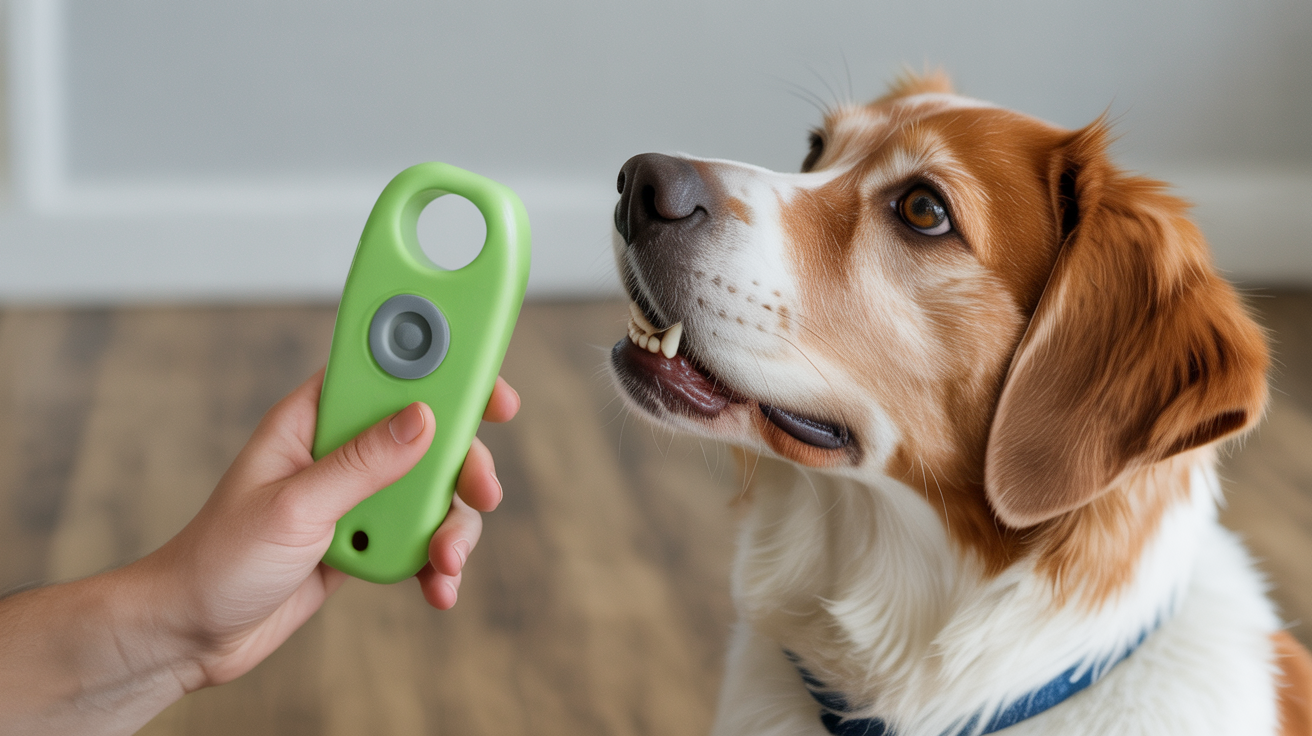
A clicker is a small plastic box that makes a sharp click when you press it. That sound does one specific job: it tells your dog the exact moment they did something right, and that a reward is on the way. Nothing more. Nothing less.
That precision is what makes it so useful. Saying "yes" or "good boy" works fine, but your voice changes with your mood, and the syllable still takes time to form. A click is instant, consistent, and carries no emotional charge. Over hundreds of repetitions, your dog learns that the click means "that thing you just did earned you something good." From there, you can teach almost anything.
This guide covers how to get the clicker loaded up in your dog's brain, how to apply it to real behaviors, and the most common mistakes to sidestep.
How to Charge the Clicker
"Charging the clicker" means teaching your dog that the click sound predicts a treat. The dog does not need to do anything special during this stage. You are simply pairing the sound with food, over and over, until the association is solid.
Here is how to run a charging session:
- Grab 10 to 20 small treats (pea-sized; something your dog genuinely wants).
- Hold the clicker at your side or behind your back so the sound is not sharp in your dog's ears.
- Click once, then deliver a treat within one to two seconds. Toss it on the floor if you like, so your dog looks away and then returns to you for the next repetition.
- Pause two to three seconds between repetitions. Repeat until you have worked through your treat pile.
- Run two or three short sessions like this on the first day.
You will know charging is working when your dog's head snaps toward you the moment they hear the click, even before the treat appears. That is the conditioned response you are after. Most dogs show it within one to two sessions. Some take a little longer, especially if they are easily distracted or have had little food-reward history.
One rule that holds for all of clicker training: click only once per behavior, and always follow every click with a treat. The click makes a promise. Breaking that promise even a few times weakens the association.
Applying Marker Timing to Real Behaviors
Once your dog understands that click equals treat, you can start clicking the exact moment they do something you want. The goal is to mark the behavior at its peak, not after it is finished.
A concrete example: teaching sit. Rather than waiting until your dog's backside has been on the floor for three seconds and then saying "good sit," you click the instant the rear hits the ground. Your dog learns that the downward hip movement is the event being rewarded, not everything that happened afterward.
Timing is the whole game. A click that arrives half a second late can accidentally reinforce whatever your dog did after sitting, such as starting to get up or sniffing the ground. If your timing is off, do not beat yourself up; just reset and try again. Short, focused sessions of two to three minutes make it easier to stay sharp than marathon training marathons.
For cues like sit, down, stay, and leave it, the clicker gives you a clean way to mark the exact moment the behavior criteria are met. Once you have clicked, release your dog from the position by tossing the treat a short distance, then ask again.
Recall follows the same logic. You click the instant your dog commits to running toward you, not when they arrive at your feet. That early mark tells them "the decision to come is what matters." For more on building a solid recall, see how to teach a reliable recall so your dog comes every time.
Rate of Reinforcement and Session Structure
Rate of reinforcement refers to how often your dog earns a click and treat per minute. In early learning, a high rate matters. If your dog is going several minutes without any feedback, they have no data on what they are supposed to be doing, and they will eventually disengage.
Aim for roughly five to ten clicks per minute when introducing a new behavior. That sounds fast, but with small behaviors like a nose touch or a sit, it is achievable. As the behavior becomes more reliable, you can reduce frequency without losing performance, because the dog now understands what you are asking.
Keep sessions short. Two to five minutes is a reasonable ceiling for most dogs, especially puppies or dogs new to training. End on a success, before your dog loses interest, rather than pushing until they quit. Multiple short sessions in a day are more productive than one long one.
A quick breakdown of session structure that tends to work:
| Phase | What you do | Duration |
|---|---|---|
| Warm-up | Ask for something the dog knows well; get a few quick clicks | 30 seconds |
| New work | Work on the skill you are building | 2 to 3 minutes |
| Jackpot finish | End with a behavior the dog loves; give an extra treat | 30 seconds |
Common Mistakes and How to Avoid Them
Clicking late. This is the most frequent issue. If you click when your dog is halfway through sitting, or when they have already started to rise, you are reinforcing movement, not stillness. Slow down the behavior if you need to: lure a sit slowly, watch for the moment contact is made, then click.
Using the clicker like a remote control. The clicker is not a way to call your dog to you or get their attention. Clicking without a treat following, or clicking to interrupt a behavior, erodes the whole system. The click always ends a behavior and promises a reward. It is not a noise to get attention.
Treating without clicking. Once you introduce the clicker, treats should flow from clicks. Handing out treats for general good behavior while also using a clicker creates confusion about what, exactly, the click means.
Training in a high-distraction environment too soon. Start indoors, in a quiet room. A dog that is staring at squirrels through a window cannot pay attention to your timing, and you cannot get a high enough rate of reinforcement to make progress. Build the behavior at home first, then take it outside gradually.
Clicking more than once per behavior. A double-click can startle some dogs and muddies the "one mark per event" rule. One press, one click, one treat.
Fading the Clicker Once Behavior Is Reliable
The clicker is a teaching tool. It is not something you need to carry forever. Once a behavior is on cue and your dog performs it reliably across different settings, you can begin fading the clicker.
Fading works like this: continue to reward with treats but shift from clicking every repetition to using a verbal marker like "yes" on some repetitions. Over time, reduce the frequency of treats as well, moving to a variable schedule where the dog gets a reward on some correct responses but not all. Variable schedules produce very persistent behavior once established.
You might still bring the clicker back when teaching something new, refining a behavior, or working through a problem. Think of it as a precision instrument you reach for when accuracy matters.
For crate training or working on loose-leash walking, the clicker helps in the early stages when you need to mark very specific moments, such as when your dog steps toward the crate willingly or glances back at you on a loose lead.
Frequently Asked Questions
Do I have to use a clicker, or can I use my voice?
A verbal marker like "yes" works on the same principle and is perfectly effective. The advantage of a clicker is the consistency of the sound: it never wavers based on how tired or frustrated you are, and it has a distinct acoustic quality your dog does not hear in everyday conversation. If you cannot hold a clicker comfortably (due to hand issues, for example), a verbal marker is a solid substitute.
My dog seems scared of the click. What should I do?
Some dogs, particularly noise-sensitive ones, flinch at the sharp crack of a standard clicker. Try muffling it by pressing the clicker against your thigh or wrapping it partially in a cloth. You can also try a "soft" clicker, which produces a gentler sound, or use a pen click as an alternative. If your dog is extremely sound-reactive, a verbal marker may be more appropriate from the start.
How long does it take to charge the clicker?
Most dogs make the connection within one to three short sessions. You will see it when their head swings toward you immediately after the click, before the treat appears. If it is taking longer, check that your treats are genuinely motivating (not just kibble if your dog is not hungry), and that you are keeping sessions calm and low-distraction.
Can I clicker train a puppy?
Yes, and early is generally easier. Puppies have not yet developed competing habits, and their attention is naturally drawn to novel sounds and food. Keep sessions very short with young puppies, two minutes at most, and use their meal kibble as treats to avoid overfeeding. The charging process works exactly the same way.
Does every family member need their own clicker?
Not necessarily. The dog will respond to the clicker regardless of who holds it, as long as the same rules apply: one click, always followed by a treat, used only to mark the desired behavior. Consistency in how everyone uses it matters more than whether each person has their own device.
Houndwise is an independent dog-care resource. Nothing here is a substitute for professional veterinary or behavioral advice. If your dog has significant fear, aggression, or anxiety, consult a credentialed behavior professional.