Training & Behavior
Crate Training a Dog the Calm, Positive Way
How to crate train a dog or older rescue the calm, positive way, build good associations, handle nighttime, and avoid the mistakes that backfire.
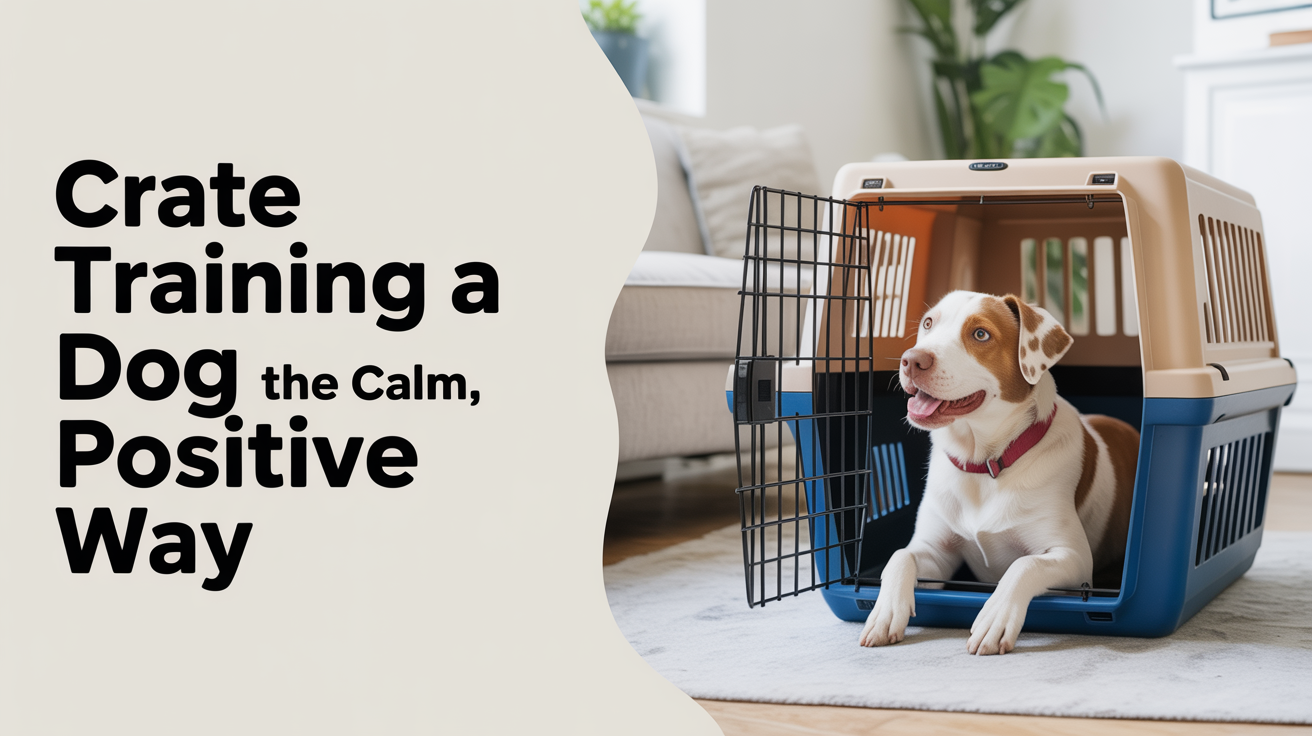
Crate training a dog works because dogs naturally seek out small, enclosed spaces to rest. Done right, the crate becomes somewhere your dog chooses to go, not somewhere you force them, which is the same never-force principle at the heart of the Humane Society's crate-training primer. Done badly, it creates anxiety that can take months to undo. This guide covers how to build that positive association from day one, how to handle common hiccups, and what to do when you're working with an older dog who has no idea what a crate is for.
Choosing the right crate
Size is the most common mistake. A crate should be just large enough for your dog to stand up, turn around, and lie down comfortably. Bigger sounds kinder, but a dog with a large open space will often use one corner as a bathroom and the other as a bed. If you have a puppy, buy a crate sized for their adult weight and use a divider to block off the extra space until they grow into it.
Wire crates and plastic airline crates both work. Wire crates fold flat, offer more airflow, and let your dog see what's happening around them. Plastic crates feel more den-like and are better for anxious dogs who settle easier with walls. Soft-sided fabric crates are fine for calm, already-trained dogs but aren't safe for puppies or dogs who paw or chew at the walls.
Building a good association before closing the door
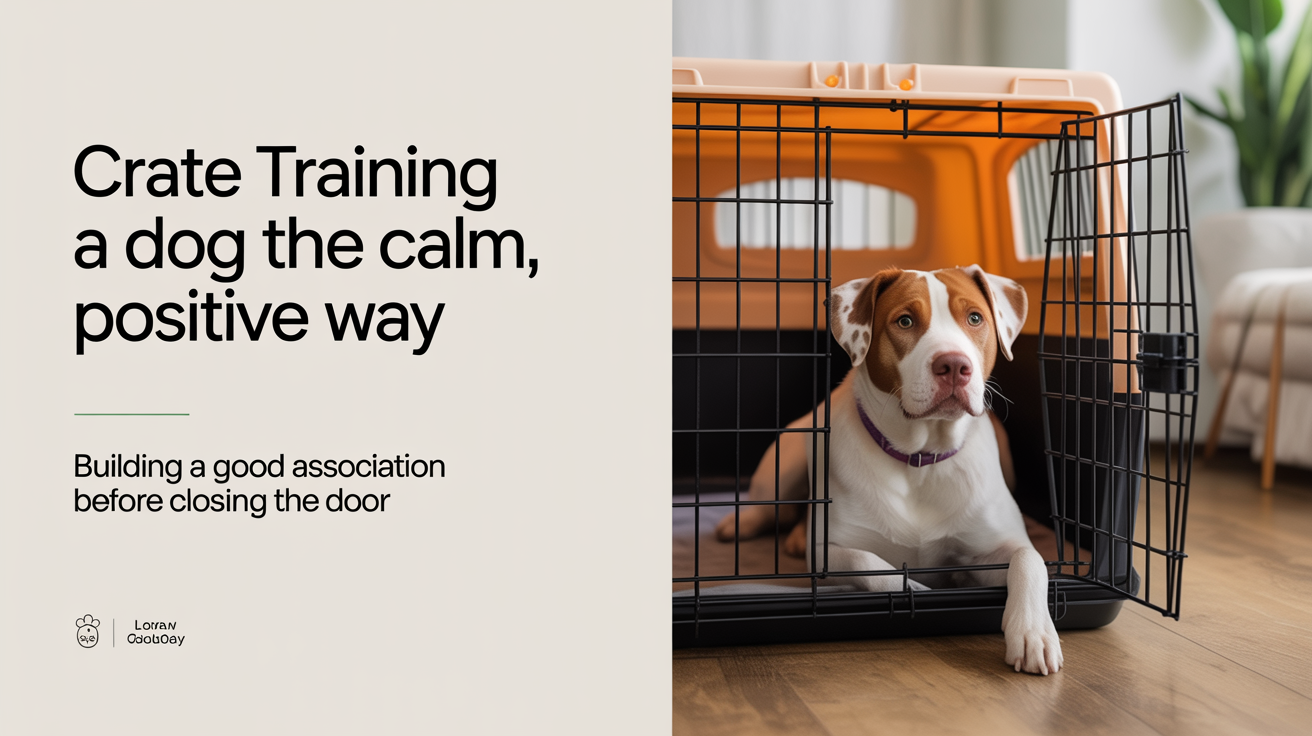
Rushing to shut the dog in is where most people go wrong. Spend two to three days just making the crate a good place before you even think about latching it.
- Toss high-value treats inside without asking your dog to do anything. Let them walk in and out freely.
- Feed meals near the crate, then just inside the entrance, then all the way in.
- Leave a worn t-shirt or blanket inside that smells like you.
- Place the crate in a room where the family spends time, not in a back hallway.
Once your dog is walking in voluntarily, start rewarding them for staying inside with the door open. Then close the door for a few seconds, treat through the door, and open it again before they ask to leave. Build duration slowly, over days.
A realistic crate training schedule
How long this takes depends on the individual dog, but here's a general framework. Puppies need shorter sessions and more frequent potty breaks. Adult dogs who've never been crated often take longer to build confidence, not less.
| Dog age / situation | First session length | Daytime max (total) | Overnight |
|---|---|---|---|
| 8-10 week puppy | 5-10 minutes | 1-2 hours with breaks | 3-4 hours max |
| 3-6 month puppy | 15-30 minutes | 2-3 hours | 4-5 hours |
| Adult (new to crate) | 10-15 minutes | Work up slowly | When fully comfortable |
| Adult (experienced) | Comfortable for hours | 4-5 hours | Full night |
The rule of thumb for puppies is one hour per month of age, plus one, as a maximum. A four-month-old puppy can hold it for about five hours, but that's the ceiling, not the target. More frequent breaks protect both bladder development and the relationship.
Handling the dog crate at night
Nighttime is where crate training gets hard, especially in the first week. A puppy who was sleeping in a pile with their littermates is now alone in a box in a strange house, and they're going to tell you about it.
Put the crate in your bedroom, at least initially. This sounds like giving in, but it's practical. You'll hear when your puppy needs a middle-of-the-night bathroom trip, and the sound of your breathing actually helps them settle. Once they're sleeping through reliably, you can move the crate to wherever you want it.
If your dog whines at night:
- Wait a few minutes to see if they settle on their own. Sometimes they do.
- If the whining escalates or sounds urgent (and your puppy is due for a bathroom break), take them outside calmly, no play, straight back to the crate.
- Don't turn the bathroom trip into a social event. Lights low, no talking beyond what's needed, immediate return.
- Don't reward prolonged whining by opening the crate, but also don't leave a puppy to cry for hours. Use judgment about whether the sound is "I'm bored" versus "I genuinely need out."
A white noise machine or a ticking clock near the crate can help with the transition.
Crate training an older dog
Crate training an older dog is slower, but it works. Dogs who spent years sleeping on the couch aren't going to understand why this box is supposed to be exciting, and rescue dogs may have had bad experiences with confinement that make them wary.
The same principles apply, but give more time at each step. Don't rush toward closing the door. Feed every meal inside the crate for at least a week. Use your dog's highest-value treats, real chicken, cheese, whatever makes them light up. Keep sessions short enough that they never seem stressed.
Signs that you're moving too fast: drooling, panting, pawing at the door, refusing to go in, or not finishing treats they normally love. If you see any of these, back up a step and slow down.
One thing that helps older dogs is tiring them out first. A long walk or a solid leash training session before a crate session means they're more likely to settle quickly. A dog who still has a lot of energy won't rest anywhere, including the crate.
Mistakes that backfire
Using the crate as punishment. The second you start sending your dog to the crate when they've done something wrong, you've undermined everything. It needs to stay associated with good things only.
Leaving them in too long. This is both a welfare issue and a training issue. A dog who's left for eight hours regularly will develop frustration, anxiety, or bladder problems. If your schedule doesn't allow for breaks, hire a dog walker or use doggy daycare for part of the day.
Giving in to demand barking. If your dog figures out that barking gets the door opened, they'll bark every time. The solution is to not open the door while they're barking, but also not to let them get so frustrated that barking is their only option. Set them up to succeed with short sessions and let them out during a calm moment.
Skipping straight to long sessions. You can't rush the foundation. Ten minutes of solid progress each day beats one frustrated hour.
As your dog gets comfortable in the crate, you'll likely notice them going in on their own to nap. That's the goal. Building that kind of confidence transfers to other areas of training too, a dog who feels secure in their environment is easier to work with on recall and other behaviors.
Frequently asked questions
How long does crate training take?
It varies by dog, age, and history. A young puppy with no bad associations can often be comfortable with short sessions within a week. An older dog who's anxious or had difficult experiences may take three to six weeks of patient, gradual work. There's no shortcut that doesn't risk backfiring.
Should I put food and water in the crate?
Water for short sessions isn't necessary if your dog is well-hydrated. For longer stays, a clip-on bowl works better than a bowl that spills. Don't put food in the crate during unsupervised time, it can cause stomach upset and attracts ants. Chew toys like stuffed Kongs are better for keeping a dog occupied.
My dog was fine in the crate but suddenly hates it. What happened?
A sudden change in crate behavior often means something happened that you're not aware of, a loud noise while they were inside, being left too long, or a bad experience. Go back to basics: open door, high-value treats, short voluntary sessions. If you see signs of separation anxiety (destruction, excessive drooling, distress that doesn't settle) beyond just the crate, talk to your vet or a certified applied animal behaviorist, because anxiety that severe needs more than crate retraining.
Is it okay to crate a dog while I'm home?
Yes, and it's actually useful during training. Short crate time while you're home (and can monitor them) builds confidence without the stress of true alone time. It also prevents puppies from getting into trouble when you can't watch them closely, which means fewer corrections, a good outcome for both of you. If your dog is jumping on guests or getting over-excited, a short crate break can reset them.
At what age can I stop using the crate?
There's no fixed age. Most dogs can be trusted loose in the house once they've demonstrated they don't destroy things, don't have accidents, and aren't anxious alone. For some dogs that's 12 months, for others it's two years. Many dogs continue to use their crate voluntarily as adults because it's genuinely become their spot, at that point, leaving it available makes sense even with the door off.