Training & Behavior
How to Stop a Dog From Jumping on People
Why dogs jump on people and how to stop it with reward-based steps everyone can follow, plus how to handle excited greeting behavior at the door.
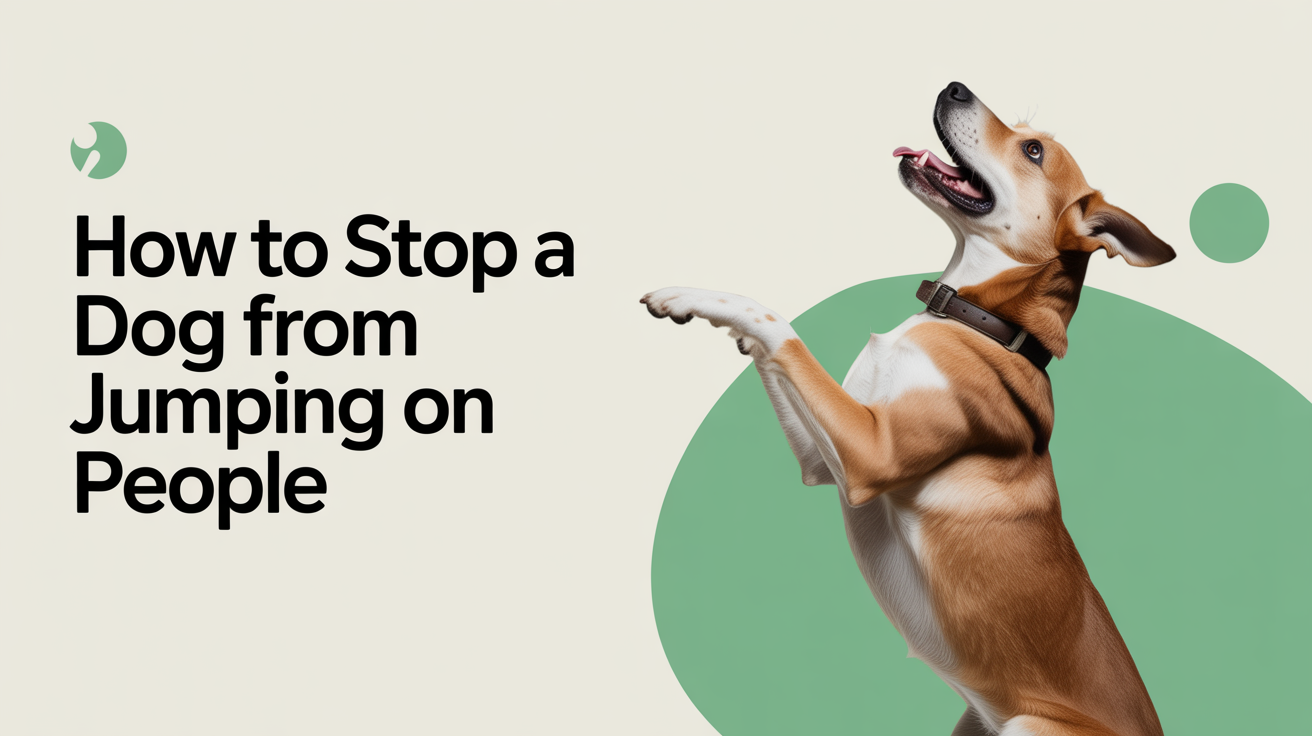
Jumping up is one of the most common complaints from dog owners, and it makes sense once you understand what's driving it. Dogs jump because it works, people react, make eye contact, and sometimes even pet them. To stop dog jumping up for good, you need to make jumping unrewarding and four-on-the-floor consistently worth the dog's while. No special equipment or corrections needed.
Why dogs jump on people in the first place
Puppies greet their mothers and littermates by nosing at their faces. When they come home with us and jump up, they're doing the same thing. We're tall. Their target is our face. It's not dominance, rudeness, or a sign of a "bad" dog, it's a greeting strategy that made sense to them once and probably got reinforced by attention.
The problem is that "attention" covers a lot of ground. Pushing a dog off, saying "no," looking at them, all of that counts as a response. Dogs that jump are often getting exactly what they want even from owners who think they're discouraging the behavior.
The core rule: remove the reward
The single most effective thing you can do is turn into a boring object the moment your dog's paws leave the ground. No words, no eye contact, no hands. Options:
- Turn your back and cross your arms
- Step sideways so they land on nothing
- Walk away if there's space
The dog learns: paws on human = human disappears. Most dogs start to lose interest in jumping within a few sessions if this is applied consistently.
The catch is consistency. If jumping works even 20% of the time, when you're tired, when guests don't follow the rule, it actually becomes more persistent because it's on a variable reinforcement schedule. Everyone who interacts with the dog needs to be on the same page.
Teaching a replacement behavior
Ignoring jumping tells the dog what not to do, but you also want to give them something to do instead. "Four on the floor" or a sit are both good default greetings.
Four on the floor is simpler for dogs who find sitting during excitement hard:
- Wait for all four paws to touch the ground (even briefly).
- Mark that moment with a word like "yes" or a clicker, and immediately deliver a treat or calm attention.
- Repeat. You're rewarding the absence of jumping, not a formal sit.
A sit greeting works well once the dog has a reliable sit. Ask for the sit before they get close enough to jump, then reward the sit with attention and a treat. This gives the dog a clear job: sit = good things happen.
Keep early sessions short, 5 minutes is plenty. Work in a low-distraction spot before adding people or front-door chaos.
If your dog also struggles with coming back to you when excited, building a solid recall helps a lot here, since a dog that checks in with you is already practicing impulse control.
Handling the front door
The front door is where most jumping blows up because the excitement is highest. Delivery drivers, guests, family coming home, it all triggers the same excited greeting behavior that ignores normal training.
A workable protocol:
- Before opening the door, ask your dog for a sit. If they can't sit, give them a moment to settle.
- If they get up when you reach for the handle, remove your hand and wait.
- Reach, dog stays seated, reward with a treat before opening.
- Open the door a crack. Dog pops up? Door closes. Dog holds position? Door opens further.
- Guest comes in. Dog jumps? Guest turns away. Dog has four paws down? Guest greets calmly.
This takes longer at first, sometimes a lot longer. But most dogs figure out the pattern within a couple of weeks of daily practice.
For dogs who lose their minds at the door regardless, having them on a leash during greetings gives you a way to prevent jumping physically while the training builds. A leash isn't a punishment, just a management tool that stops them from rehearsing the jumping habit while you're working on the new one.
Some owners find it useful to give the dog something to carry to the door, a toy or ball. A dog with something in their mouth can't jump and bark at the same time, and it gives the excited energy somewhere to go.
When dog jumps on guests you can't prep
Not everyone who comes to your house will know your training protocol. Children especially may squeal and reach for the dog, which is basically the jackpot reward for jumping.
Practical options:
| Situation | What to do |
|---|---|
| Guests who want to greet the dog | Brief them before they come in: "Wait until he has four paws down, then you can pet him." |
| Kids or unpredictable visitors | Put the dog on a leash or behind a baby gate until the hello chaos settles |
| Dog is already too wound up | Give them a stuffed Kong in another room for the first 5-10 minutes, then bring them out calmer |
| Guest is scared or allergic | Crate or gate from the start, no shame in managing the environment |
The goal isn't to train guests, it's to prevent your dog from getting reinforced for jumping when you can't control the situation.
How long does it take
It varies by dog and how long the habit has been in place. A 12-week-old puppy who's been jumping for two weeks is a very different project from a 3-year-old Lab who has been body-slamming visitors its whole life.
Rough timelines with consistent practice:
| Dog | Expected progress |
|---|---|
| Puppy under 16 weeks | Often sees improvement in 1-2 weeks |
| Adult dog, habit under 6 months | 3-6 weeks of consistent work |
| Adult dog, long-established habit | 2-3 months, sometimes more |
"Consistent" means every interaction, every person, every time. The dogs who take months are usually the ones getting occasional reinforcement from someone in the household.
If your dog is also pulling toward people on walks, that same forward-charging, over-the-top excitement, working on leash manners at the same time tends to accelerate both.
Frequently asked questions
My dog only jumps on certain people, why?
Dogs are good readers of body language. Someone who tenses up, makes eye contact, or reaches out to push the dog away is giving an intense, exciting response. People who calmly ignore the dog or turn away often get jumped on less. If your dog specifically targets people who seem nervous, the jumping is being reinforced by that big reaction. Have those guests practice the turn-away technique.
Is it okay to knee the dog in the chest to stop jumping?
No. That's an aversive correction that can cause physical harm and often makes dogs hand-shy or anxious. It also doesn't teach anything, the dog learns to avoid a specific motion, not to greet politely. Reward-based methods take a little longer to load but they hold up better and don't damage your relationship with the dog.
My puppy is 8 weeks old. Should I be working on this now?
Yes, now is actually the easiest time. Puppies at 8-10 weeks are lightweight and easy to ignore. Start the habit of not rewarding jumping from day one, turn away, wait for four paws, reward. Waiting until they're 40 lbs makes the same lesson harder to teach and more physically disruptive in the meantime. You can keep sessions to 2-3 minutes given their attention span.
Do I need to teach a sit, or is four on the floor enough?
Either works. Four on the floor is enough for most dogs, and some find a formal sit too hard when they're excited. If your dog has a reliable sit in low-distraction settings, a sit greeting is slightly clearer because it's a specific, discrete behavior rather than an absence of behavior, but it's not required.
Should I crate train my dog to manage jumping during greetings?
A crate can help during the early stages by giving your dog a calm default space when guests arrive, before they've learned the greeting routine. It's not a solution on its own, but combined with training it reduces the chances the dog rehearses jumping while you're still teaching the new behavior. If you haven't introduced a crate yet, teaching a dog to use one calmly is straightforward and useful beyond just jumping.
The fastest path here is removing every accidental reward while making four-paws-down reliably pay off. Get everyone in the house aligned on the same response, manage the front door with a leash or a gate while the training builds, and brief your guests. The behavior fades when it stops working, usually faster than owners expect once the rules are actually consistent.