Training & Behavior
How to Stop Your Dog Pulling on the Leash
Why dogs pull and how to teach loose-leash walking with reward-based steps, the right gear, and fixes for the dog who drags you down the street.
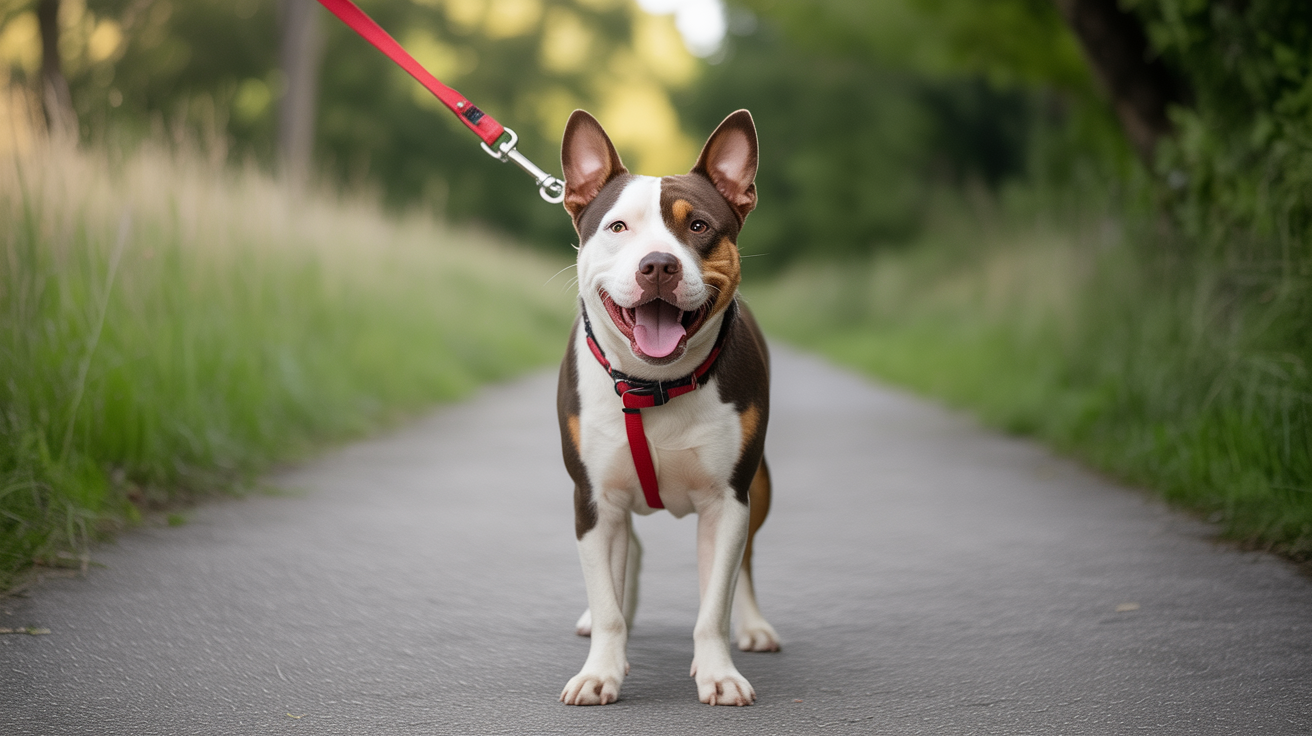
Most dogs pull on the leash because walking on a loose leash is not natural to them, they move faster than us, and the world outside is genuinely exciting. Pulling worked before you started training, so they kept doing it. To stop dog pulling on leash for good, you need to make staying near you more rewarding than charging ahead, and that takes a bit of method, not just willpower on the other end of the lead.
At a Glance
- Pulling is learned, not stubbornness: it worked before, so the dog keeps doing it. The fix is to remove that payoff, consistently.
- A front-clip harness or head halter manages pulling while you train, but neither one teaches the dog anything on its own.
- The "stop or turn" method works because a tight leash ends forward motion and a loose leash keeps it going. Dogs usually notice the pattern within a few sessions.
- Skip prong, choke, and shock collars. Veterinary behaviorists find no role for aversive tools in training, and they carry real risk of injury and fear.
- Expect 2-3 weeks for visible improvement and 4-8 weeks for reliability in a dog with a long pulling history. Puppies move faster.
- Treat quality and timing matter more than the number of hours you train each day. Ten sharp minutes beats thirty distracted ones.
Why dogs pull in the first place
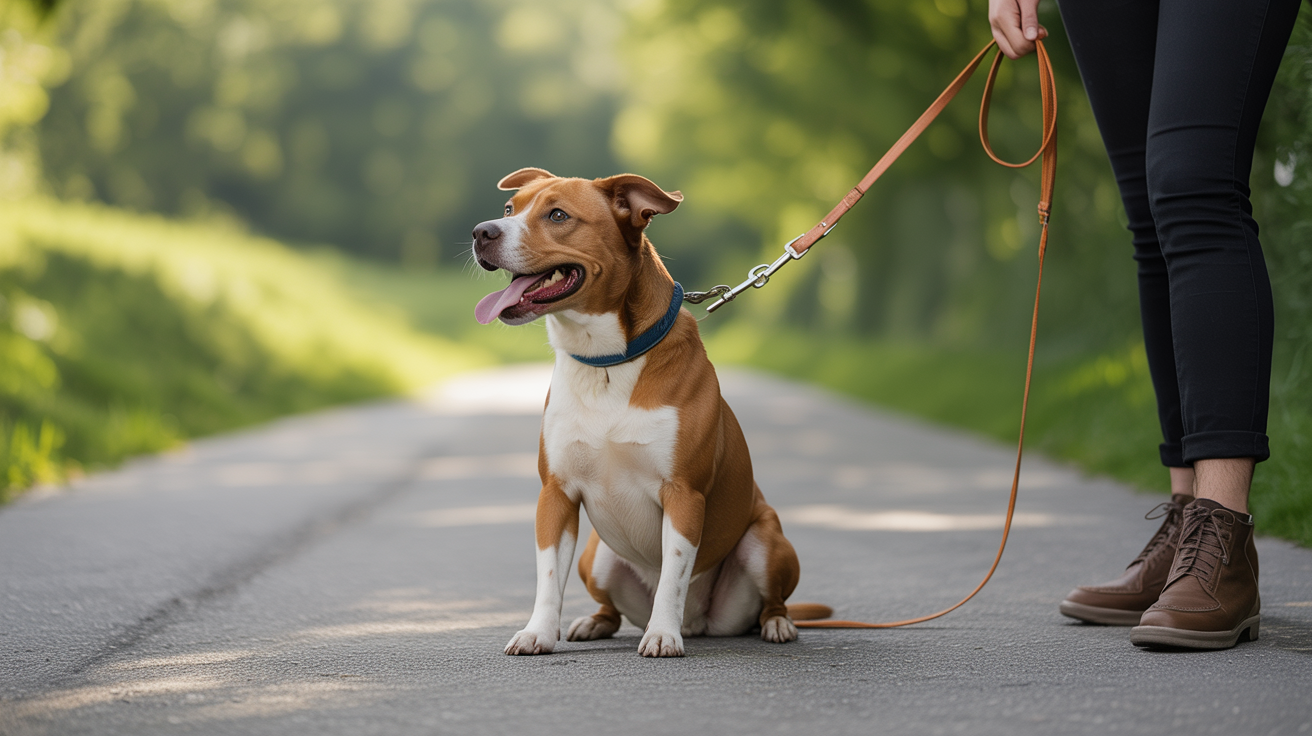
Dogs walk at roughly twice a human's pace. Add in every smell, squirrel, and interesting stranger on the route, and a dog on a 6-foot leash is basically a toddler in a toy store. Pulling is not dominance, stubbornness, or bad character. It's the dog doing what has always gotten it where it wants to go.
The leash itself can make things worse. A tight leash creates constant pressure against the dog's chest or neck, which some dogs learn to lean into, it becomes the normal walk state. That's why a harness alone won't fix pulling; you have to address the behavior, not just the hardware.
Choosing the right gear
Gear won't train your dog, but the wrong gear can slow you down or cause harm.
| Gear type | When it helps | Watch out for |
|---|---|---|
| Standard flat collar | Fine for dogs who already walk well | Can injure the neck/trachea on heavy pullers |
| Front-clip harness | Reduces forward momentum without pain | Still needs training to work long-term |
| Head halter (e.g. Gentle Leader) | Good for large, strong dogs | Needs a proper fit; some dogs resist it initially |
| Back-clip harness | Comfortable for the dog | Gives pullers the most leverage, not ideal for training |
| Prong, choke, or shock collar | Not recommended | Work through pain and fear rather than teaching a new behavior |
For most people starting leash training, a front-clip harness is the simplest starting point. It steers the dog's shoulders toward you when they hit the end of the leash, which interrupts the pulling motion without any discomfort.
A standard 4-6 foot leash is better than a retractable one. Retractable leashes teach the dog that pulling extends the line, the opposite of what you want.
Skip the prong, choke, and shock collars entirely. The American Veterinary Society of Animal Behavior's position statement on humane dog training concludes there is no evidence that aversive methods work better than reward-based ones, and that they carry real risk of fear, anxiety, and a damaged relationship with the dog. Veterinary behaviorists interviewed by the American Veterinary Medical Association go further, stating there is no role for aversive training tools even with dogs who already show aggression. If a trainer or product recommends pain or intimidation to stop pulling, that's a sign to look elsewhere.
The core training method: stop or turn
This is the foundation of loose leash walking, and it works because it removes the payoff for pulling.
How it works:
- The moment the leash goes tight, stop walking completely. Just stand still.
- Wait. Don't yank, don't say "no." Just stop.
- When your dog turns back toward you or the leash goes slack, mark it (say "yes" or click) and give a treat right at your hip, not in front of you, not at arm's length.
- Walk forward again.
- Repeat every single time the leash goes tight.
The rule is simple: a tight leash means the walk stops. A loose leash means the walk continues. Dogs figure this out faster than you'd expect, usually within a few sessions, though the behavior won't be reliable for weeks.
Some trainers prefer the "180-degree turn" variation: instead of standing still, you turn and walk the other direction the moment the leash tightens. This keeps you moving (less frustrating for high-energy dogs) and more actively reorients the dog toward you. Either approach works; pick whichever you'll stick to consistently.
A few things that undermine this method:
- Letting the dog pull even once when you're tired or in a hurry. Every successful pull is a training setback.
- Treats that aren't good enough. In a distracting environment, you need something the dog actually wants, small pieces of chicken, cheese, or hot dog beat dry kibble every time.
- Sessions that are too long. Ten focused minutes beats 30 minutes of inconsistent reinforcement. Shorter, cleaner sessions are better for both of you.
- Treats that are too big or slow to eat. Pea-sized pieces keep the session moving; a dog chewing a large chunk loses the connection between the loose leash and the reward.
Building duration and distance
Once your dog can walk 10-15 steps without pulling in a quiet spot (your driveway, a low-traffic street), start adding more distance before you treat. The goal is to reward the behavior of being near you, not just the absence of pulling.
A useful target: treat every 5-8 steps when things are going well, then stretch to every 15-20 steps as the dog gets better. If you find yourself treating every single step just to keep them from pulling, you've moved to a harder environment too fast. Go back somewhere quieter and rebuild.
Work up to distracting environments gradually:
- Start at home or in your yard.
- Move to a quiet street or parking lot.
- Try a park on an off-peak morning.
- Work up to busier areas once the behavior is solid in easier ones.
This process usually takes 4-8 weeks of daily practice for a dog who has been pulling for a while. Puppies learn faster; adult dogs who have been reinforced for pulling for years take longer but do get there.
A sample progression that works for most dogs:
| Week | Environment | Treat frequency | What you're watching for |
|---|---|---|---|
| 1-2 | Driveway or hallway, no distractions | Every 3-5 steps | Dog checks in with you voluntarily |
| 3-4 | Quiet street, occasional passerby | Every 5-8 steps | Loose leash holds through mild distractions |
| 5-6 | Park at an off-peak time | Every 10-15 steps | Recovery is quick after a squirrel or another dog |
| 7-8 | Regular walking route, moderate traffic | Every 15-20 steps, then random | Dog stays near you without constant reminders |
If a week's session looks worse than the one before it, that's not failure, it usually means the environment jumped too far too fast. Drop back a stage for a few days rather than pushing through.
What to do with the very strong puller
A 90-pound Labrador who has been dragging its owner down the street for three years is a different problem from a 12-week-old puppy. For a large dog that genuinely overpowers you:
- Use a front-clip harness or head halter as an immediate management tool so you're not getting hurt on walks while you train.
- Keep early training sessions short and in very low-distraction environments where the dog can actually succeed.
- Practice "attention" first: reward your dog for making eye contact with you on cue. A dog that checks in with you voluntarily is already thinking about you, which makes loose-leash work much easier.
If you have a dog who lunges at other dogs or cyclists on leash, that's a separate issue called leash reactivity, and the loose-leash method above isn't quite enough on its own. Reactivity has good, reward-based protocols, if that's your situation, it's worth looking into those specifically or working with a certified behavior consultant (look for IAABC or CCPDT credentials).
Training a dog to walk nicely often pairs well with other foundational skills. A dog who has a solid recall, coming back to you reliably when called, is also more inclined to stay connected on leash; building that recall from scratch takes its own dedicated work. And if your dog also jumps up on people at the start of walks when excitement is high, the same low-key reward-based approach applies there too.
Keeping walks enjoyable while you train
Training doesn't mean every walk has to be a strict drilling session. You can designate a "sniff zone", a patch of grass where your dog gets to pull and explore freely on a longer lead, and use your regular leash for the parts of the walk where you want better behavior. This gives the dog an outlet for all that sniffing energy, which actually makes them calmer on the structured portions.
The goal isn't a robot dog marching at your knee. It's a dog who can walk near you on a loose leash when you need it, and who you actually enjoy taking out. If walks have become a daily battle you dread, that's worth fixing, both for your shoulder and for the dog's wellbeing.
Dogs who don't get adequate walks often develop other problems: destructive behavior, anxiety, excessive barking. A calm, settled dog at home often starts with good exercise and structure, something crate training can support alongside regular walks.
Frequently asked questions
How long does it take to stop a dog from pulling on the leash?
It depends on the dog's age, how long the behavior has been reinforced, and how consistent you are. Many dogs show noticeable improvement within 2-3 weeks of daily practice. For a dog who has been pulling for years, expect 6-8 weeks before it feels reliable in most environments. There's no shortcut, but consistency matters far more than the number of hours you put in per day.
My dog only pulls toward other dogs. Is this the same problem?
Not exactly. A dog who pulls toward other dogs is showing excitement or frustration, sometimes called leash frustration or reactivity. The basic loose-leash protocol still applies, but you'll also need to work on your dog's reaction to seeing other dogs specifically, usually through counter-conditioning (pairing the sight of another dog with treats). It's manageable but a bit more involved than basic leash manners.
Does a no-pull harness solve the problem on its own?
It helps manage the pulling while you train, but it doesn't teach anything by itself. If you put the harness on without changing how you respond to pulling and rewarding loose-leash walking, the dog will likely learn to pull just as hard with the harness on. Think of it as a tool that makes training easier, not a substitute for it.
Can I train an older dog to stop pulling?
Yes. Adult dogs learn new behaviors well; they may just take a little longer because older habits are more ingrained. The same method works, stop or turn when the leash goes tight, reward generously for a loose leash. The main thing is patience with the timeline and not expecting week-one results to match what you'd see with a young puppy.
Should I use a clicker for leash training?
A clicker can be useful because it gives a very precise mark the instant the dog does the right thing. But it's not required, a clear verbal marker like "yes" works just as well for most people. If you find juggling a leash, treats, and a clicker too complicated, drop the clicker. The treats and the timing are what matter most.
Why did my dog's pulling get worse after a few good weeks?
This usually means an easy exception crept in, letting the dog drag you the last block to the park because you were running late, for instance. Every unrewarded pull is one thing, but every rewarded pull re-teaches the old lesson. Go back a stage in distraction level for a few sessions and tighten up consistency before pushing forward again.
Is a head halter safe for daily walks?
Yes, when it's fitted correctly and introduced gradually. A head halter should sit high on the muzzle, snug enough that it can't be pawed off but not so tight it restricts panting or drinking. Most dogs need a few short, treat-heavy sessions to accept the feel of it before their first real walk. Avoid jerking the leash while your dog wears one; the point is gentle redirection of the head, not a corrective yank.