Puppies
House-Training a Puppy, Step by Step
A step-by-step house-training plan for puppies: a potty schedule, how to use the crate, handling accidents calmly, and getting to reliable months sooner.
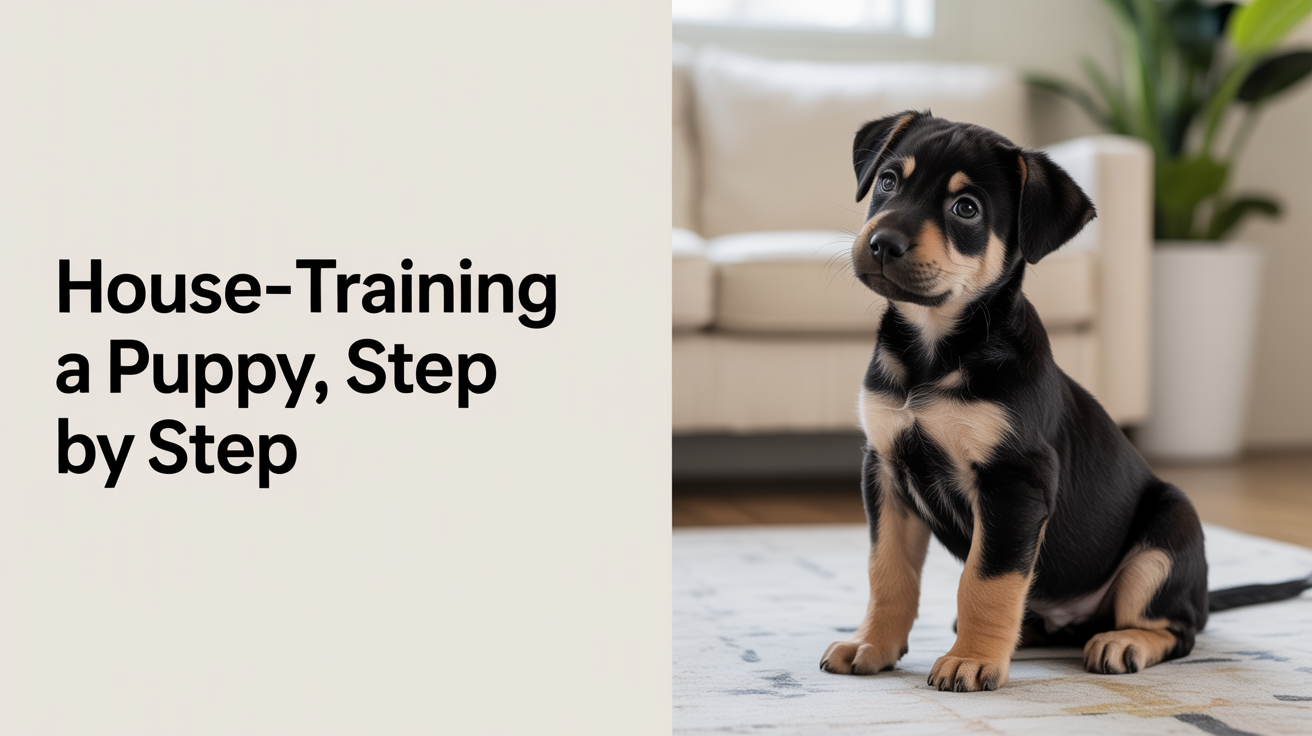
House training a puppy takes most owners four to six months of consistent effort, though smaller breeds often need closer to a year because their bladders are tiny relative to their body size. The good news is the process itself is straightforward: take the puppy out at the right times, reward the right behavior, and manage the environment so mistakes become rare. The rest is repetition.
How puppies learn bladder control
A puppy can hold its bladder roughly one hour for every month of age, up to about eight or nine hours in an adult dog. An eight-week-old has a maximum hold of around two hours, and that's if everything goes perfectly. In practice, puppies need to go out immediately after waking up, within minutes of eating or drinking, and after any burst of play.
That timeline isn't flexible. A puppy that "knows better" but has an accident indoors usually just ran out of holding capacity, not willpower. Treating it as a training failure, scolding, rubbing their nose in it, doesn't teach anything useful. It teaches the puppy to hide from you when they need to go, which makes house training harder.
Building a potty training schedule
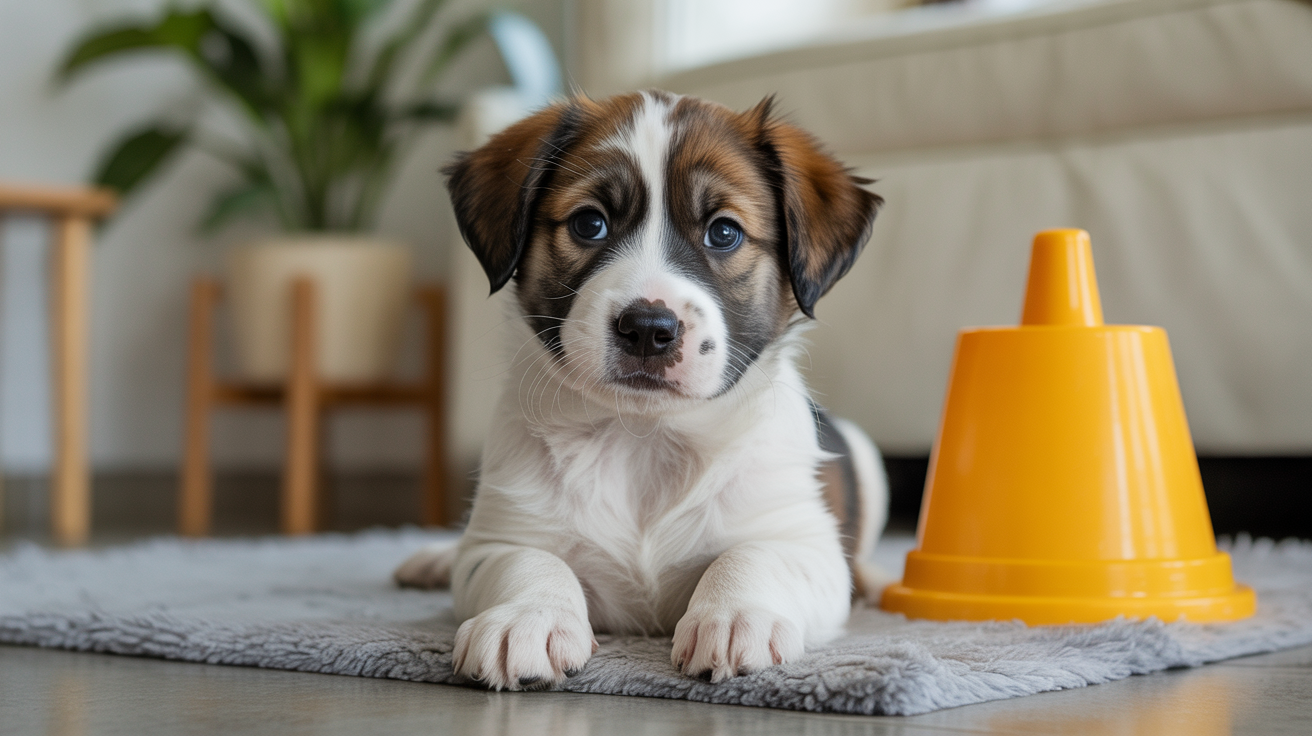
The potty training schedule is the single biggest lever you have. Dogs thrive on patterns, and a predictable schedule means you can get the puppy outside before the urge builds to the point of no return.
A workable schedule for an eight-to-twelve-week-old puppy looks like this:
| Time | What to do |
|---|---|
| First thing in the morning | Take outside immediately, before anything else |
| After each meal (3x daily at this age) | Outside within 5 minutes of finishing |
| After every nap | Outside as soon as they wake |
| After playtime | Outside when play winds down |
| Every 1-2 hours during the day | Proactive trip even with no obvious cue |
| Last thing at night | Outside right before confinement for sleep |
As the puppy gets older and gains control, you can stretch the daytime intervals. By four months, many puppies can manage two to three hours between trips. By six months, three to four hours is reasonable during the day.
Track accidents for a week. If they cluster at a specific time, say, 45 minutes after the midday meal, that's your cue to add a trip then. The schedule should reflect your actual puppy, not a generic chart.
Crate and potty training: how they work together
Crate and potty training are almost always taught together, because the crate does the work of preventing accidents when you can't actively supervise. Dogs instinctively avoid soiling where they sleep, so a properly sized crate gives you a reliable "pause" during gaps in the schedule.
The crate must be sized correctly. If it's too large, the puppy will use one end as a bathroom. The space should be big enough to stand up, turn around, and lie down, nothing more. If you bought a crate sized for the adult dog, use a divider panel to block off the excess.
A few things that make the crate work better:
- Introduce it gradually before you need it for overnight confinement. Feed meals inside with the door open, toss treats in throughout the day.
- Never use the crate as punishment. It should be a neutral or positive place.
- Don't leave a young puppy crated longer than they can hold their bladder. An eight-week-old left for four hours will soil the crate, which breaks the instinct you're relying on.
- If the puppy cries at night, take them outside calmly and quietly, then put them straight back. No play, no fussing, just the functional trip.
If your puppy is repeatedly soiling the crate, two things are worth checking: the crate is too large, or the intervals are too long for their age. Puppies that were kept in poor conditions (pet stores, some large-scale breeders) sometimes arrive with the instinct already blunted, which takes more time and patience to work around.
During your first week with a new puppy, the crate does double duty: it keeps the puppy safe when you're not watching and gives them a calm space to decompress in a new environment.
What to do when you catch an accident, and when you don't
Accidents are part of the process. How you respond matters more than the fact that one happened.
If you catch it happening: interrupt with a calm, neutral sound, a quick "outside" or a soft clap, and immediately take the puppy to the designated spot. If they finish there, treat and praise. You're not punishing, you're redirecting.
If you find it after the fact: clean it up and move on. Puppies live in the present. Scolding a puppy two minutes after an accident doesn't connect in their mind to what they did, and the ASPCA makes the same point: a dog learns nothing from being scolded for a past accident. It just makes them anxious around you.
Enzymatic cleaners (Nature's Miracle is the common brand, though there are many others) break down the urine compounds that standard cleaners miss. If the spot still smells like urine to the puppy, they're more likely to return to it. Scrub with enzymatic cleaner and let it dry fully before walking on the area.
If accidents are happening many times a day despite a tight schedule, it's worth a vet visit to rule out a urinary tract infection. UTIs are common in young puppies and make holding anything nearly impossible. Signs include frequent squatting with little output, straining, or blood-tinged urine.
Teaching the puppy to signal
Most dogs develop a signal naturally over time: they pace near the door, sniff around, or sit and stare at you. Some owners actively teach a specific signal, like ringing a bell hung at nose height by the door. If you want to train a bell signal:
- Hang the bell by the door you use for potty trips.
- Every time you take the puppy out, guide their nose to the bell and let them bump it (treat when they do).
- Open the door immediately after contact with the bell.
- Repeat at every single trip for several weeks.
The bell works because the puppy learns that touching it opens the door. It's faster to read than subtle body language, which is useful if you have kids in the house or a less attentive household member.
One note: some puppies figure out that ringing the bell also gets them outside for play, and will ring it constantly. If that happens, switch to taking them directly to the potty spot and back inside without play, reserving playtime for other trips.
Spending time on focused training like this also builds the relationship that makes socializing your puppy and later skills like stopping puppy biting and nipping go more smoothly, since the puppy is already tuned in to your cues.
Frequently asked questions
How long does house training a puppy actually take?
Most puppies reach reliable daytime control between four and six months of age with consistent training. Overnight reliability often comes later, around six to eight months, once the puppy can physically hold through the night. Smaller breeds (under 10 pounds as adults) tend to take longer because their bladders are proportionally smaller. If a puppy isn't making progress by five or six months, it's worth ruling out a medical issue.
My puppy was doing great and suddenly started having accidents again. What happened?
Regression is normal, especially around developmental changes like teething (three to five months) or adolescence (six to twelve months). A puppy that was reliable at twelve weeks may have setbacks at four or five months as their brain reorganizes. Tighten the schedule back up, reduce unsupervised time, and treat it like a refresh rather than a failure. If the regression is sudden and severe, rule out a UTI.
Can I house train a puppy without a crate?
Yes, but it's harder. The crate does the work of preventing accidents when you're not actively watching. Without it, you need either constant eyes-on supervision or reliable confinement in a small pen or puppy-proofed room. Some owners use exercise pens with a pee pad in one corner as a middle option, though pads can teach puppies it's acceptable to go indoors, which creates its own complication later.
How do I handle accidents at night?
For puppies under four months, expect one overnight trip, sometimes two. Set an alarm rather than waiting for whining, since by the time they're crying they may already be going. Take them outside, wait for them to finish, treat quietly, and put them back without making it a social event. As they age and gain control, you can push the alarm later by 15-minute increments until the overnight trip isn't needed.
What if my puppy goes outside but then has an accident inside five minutes later?
This is common in young puppies who haven't fully emptied their bladder, and in cold or distracted dogs that go partly but don't finish. After they go outside, give them a few extra minutes, walk them around, give them a chance to go again. Some puppies, especially in cold weather, rush the outdoor trip and save the rest for inside. Keeping outdoor trips long enough to actually finish pays off.