Puppies
How to Stop Puppy Biting and Nipping
Why puppies bite and how to stop the nipping with bite-inhibition steps, redirection, and calm routines that get you through the land-shark phase.

Puppy biting is normal. Puppies use their mouths to explore, play, and communicate, it's how they interact with littermates from the day they're born. That doesn't make it fun when those needle teeth are aimed at your hands, but it does mean you're not dealing with an aggressive dog. You're dealing with a puppy who hasn't yet learned where mouths belong and where they don't.
At a Glance
- Bite inhibition first, then no biting at all: teach softer bites before demanding zero mouthing.
- The core method is yelp, go still, briefly withdraw attention. It's the same feedback loop littermates use on each other.
- Redirect early, before the puppy is already at peak arousal on your wrist, not after.
- Overtired puppies bite harder and more often, a nap fixes more biting problems than any technique.
- Skip physical corrections entirely, scruffing, muzzle-holding, and alpha rolls damage trust and can increase biting.
- Growling or stiffening before contact (not during play) is different from normal mouthing and worth a trainer's eyes.
Why puppies bite so much
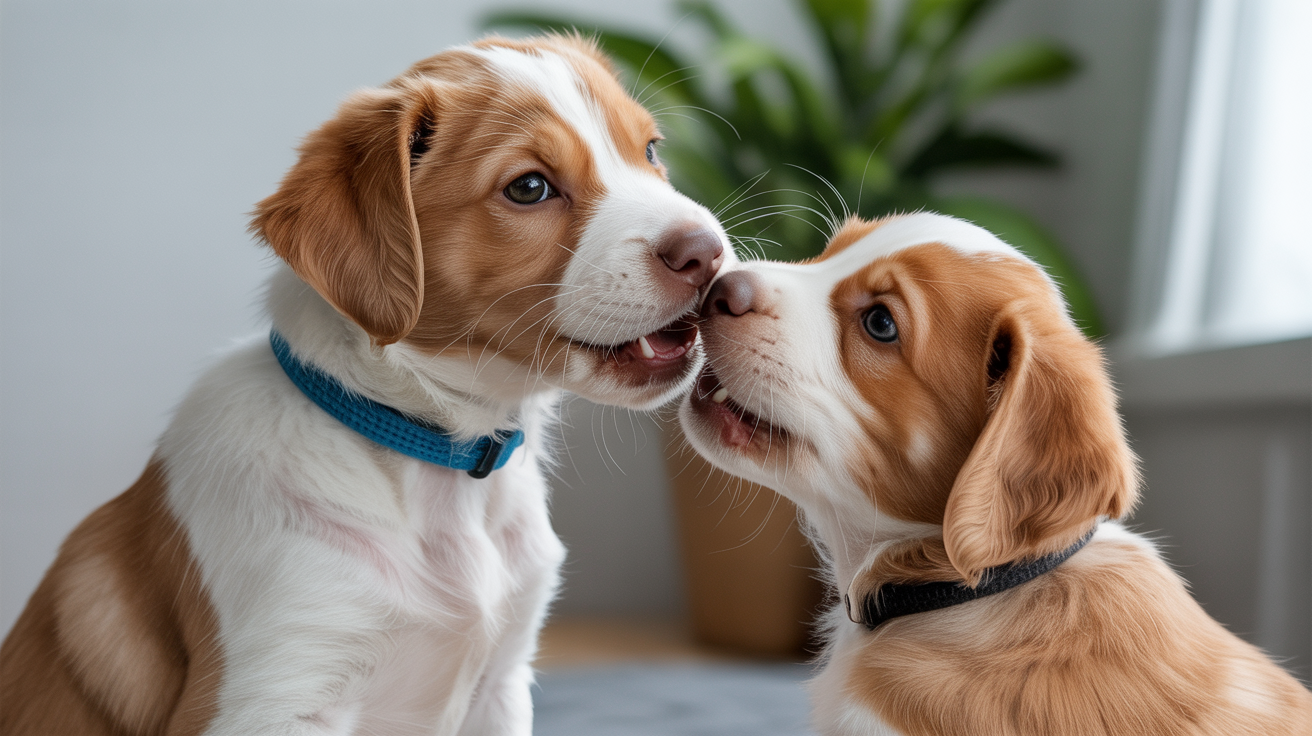
Before 8 weeks, a puppy's mother and siblings handle most of the correction. When a pup bites too hard during play, the other dog yelps and stops engaging. That feedback loop, repeated hundreds of times, is the foundation of bite inhibition, the learned ability to control the pressure of a bite. The ASPCA describes this same mechanism in its own guide to puppy mouthing: puppies bite each other during play, an overly hard bite gets a yelp in response, and "the offender is often taken aback by the yelp and also stops playing for a moment." That's the exact response you're recreating at home.
When puppies come home at 8 weeks, that education is half-finished. They still have the instinct to mouth everything, but they haven't had much practice calibrating their bite pressure against creatures who don't bounce back the way littermates do.
The land shark phase, that window between 8 and 20 weeks where puppies seem to bite constantly, coincides with teething. Adult teeth start pushing through around 12 to 16 weeks, which makes gums sore and increases the drive to chew on anything within reach. Biting spikes during this window, then gradually tapers if you're consistent.
Understanding this matters because the goal isn't to stop puppy mouthing entirely overnight. It's to teach two things in order: first, softer bites; then, no biting people at all.
Bite inhibition: teach soft before you teach none
This is the part most owners skip, and it's why some dogs grow up with a binary relationship with their mouths, either fully inhibited or dangerously uncontrolled. A dog with good bite inhibition has learned, through repetition, that pressure on skin causes play to stop. If that dog ever bites in an emergency, the result is a bruise, not an injury requiring stitches.
Here's how to build it:
- Let normal puppy mouthing happen at first. Don't pull away or react to light pressure.
- When the bite crosses from gentle into painful, make a sharp, high-pitched sound, a short "ouch" or a yelp, and immediately go limp and still. Don't yank your hand away (that triggers prey drive and makes biting more exciting).
- Wait two to three seconds, then resume play calmly.
- If the puppy bites hard again, end the play session entirely. Stand up, turn away, and ignore the puppy for 30 to 60 seconds before trying again.
- Repeat consistently. The puppy learns that hard bites end the fun.
Over one to two weeks, you're raising the bar. First you're teaching "bites that hurt end play." Then, as the puppy gets softer, you're teaching "any bite on skin ends play." Move through this gradually rather than demanding no mouthing from day one.
For more on the first days home and what to prioritize, the guide on your first week with a new puppy covers how to set a foundation without overwhelming yourself or the pup.
Redirecting to appropriate things
Bite inhibition teaches what not to bite. Redirection teaches what to bite instead.
Keep several different textures of chew toys within arm's reach wherever you spend time with your puppy. When the mouthing starts, calmly offer a toy before the pup escalates. The key word is "before", once a puppy is already at peak arousal and clamped onto your wrist, offering a toy rarely works. You're trying to intercept the behavior early.
Good options for puppies mid-teething (12-20 weeks):
- Rubber chews you can freeze (a Kong stuffed with wet food, then frozen, is a reliable standby)
- Rope toys with some give
- Bully sticks or other natural chews for supervised sessions
- Nylon bones designed for puppies (not rawhide, which poses a choking risk)
If your puppy follows you and nips at your feet while you walk, stop moving entirely. Motion is part of what makes this game interesting. Once you stop, the game ends. Resume walking only when the puppy is calm. Most puppies figure this out within a week if the response is consistent.
Hand-feeding part of a meal can help too, especially for puppies that get mouthy the moment your hands come near their face or food bowl. Take a portion of the puppy's regular kibble and deliver a few pieces at a time from an open palm, calmly, with no tug or grab involved. This teaches gentle mouth contact around your hand in a context that's naturally calmer than play, and it doubles as an easy training rep for sit or name recognition. Skip this if your puppy already shows any guarding around food, that's a different problem and worth mentioning to a trainer rather than working through alone.
Managing situations that cause biting spikes
Some contexts reliably produce more nipping, and managing them is easier than reacting to each incident.
| Situation | Why biting spikes | What to do |
|---|---|---|
| Overtired puppy | Tired puppies lose impulse control fast | Enforce a nap before play; put puppy in crate or pen |
| Over-excited play | Arousal raises bite threshold | End play before it escalates; keep sessions short |
| Hands near the face | Triggers mouthing instinct | Keep hands lower and calmer; avoid face-grabbing games |
| Teething discomfort (12-16 weeks) | Gums are sore | Rotate frozen chews; supervised chew sessions |
| Right before meals | Puppy is hungry and aroused | Don't train or play in that window; feed first |
A tired puppy is a biting puppy. Most people underestimate how much sleep puppies need, 16 to 18 hours per day at 8 to 12 weeks. If biting is worst in the late afternoon, there's a good chance the puppy missed a nap and is running on empty. Building a predictable rest-play-train-rest schedule around that reality cuts incidents significantly.
What doesn't work
Tapping a puppy on the nose, holding the muzzle shut, scruff-shaking, or alpha rolls don't stop puppy mouthing, they damage trust, increase anxiety, and in some puppies, actually increase biting because the puppy learns to bite before you can grab it. Punishment-based approaches teach a puppy to avoid you, not to stop biting. This isn't just a training preference, it's the formal position of the field: the American Veterinary Society of Animal Behavior's position statement on humane dog training concludes that reward-based methods outperform aversive, punishment-based methods on effectiveness, welfare, and the strength of the dog-human relationship, all at once, and that physical corrections carry real behavioral risk with no compensating training benefit.
Spraying bitter apple on your hands is a popular suggestion, but it's inconsistent. Many puppies don't mind the taste at all, and it teaches nothing about bite pressure.
The methods that work, bite inhibition, redirection, stopping play, all share one feature: they're communication the puppy understands. Stopping play is a language puppies already know from their littermates.
When to involve your vet or a trainer
Most puppy biting is normal and resolves with consistent handling by 5 to 6 months. There are situations worth flagging:
- The puppy growls, stiffens, or freezes before biting (not during play, but when approached or handled)
- Bites draw blood regularly and intensity isn't decreasing over several weeks
- The puppy guards objects or food and bites when you approach
- Nothing seems to decrease the frequency even after a month of consistent work
These patterns aren't necessarily signs of a dangerous dog, but they're beyond what basic bite-inhibition work addresses. The AVMA's guidance on dog bite prevention makes the useful point that most bites are a reaction to a specific trigger rather than an unprovoked event, and that reading a dog's stress signals, a tucked tail, a stiffened body, sustained staring, matters as much as any single training technique. If you're seeing those signals outside of normal play, a positive-reinforcement trainer who can observe the puppy directly is worth the cost. If guarding or stiffening is involved, mention it to your vet too, pain can increase reactive behavior.
Good socialization during puppyhood also shapes how a dog responds to handling, strangers, and novel situations. The puppy socialization window closes around 12 to 16 weeks, so the early weeks matter more than most people realize.
Frequently asked questions
How long does the land shark phase last?
For most puppies, the worst of it is between 8 and 20 weeks, with a noticeable spike during teething around 12 to 16 weeks. By 5 to 6 months, the adult teeth are in, the gum discomfort fades, and biting usually decreases if you've been consistent. Some puppies stay mouthy into adolescence (6 to 18 months), especially higher-drive breeds like Labs, Border Collies, and herding dogs, they need more physical and mental work to take the edge off.
My puppy bites hardest at kids. What should I do?
Kids move fast, squeal, and run, all of which look like a prey-animal fleeing to a puppy. Teach kids to "be a tree" when the puppy bites: stand still, fold arms, and look away. No screaming or running. Supervise every interaction, and give the puppy a time-out in its pen when the biting escalates. Don't leave young children alone with the puppy until the biting is consistently under control.
Should I let my puppy mouth at all, or is any mouthing off-limits?
During the bite inhibition phase, some mouthing is fine and even useful, it's how the puppy practices controlling pressure. What you're correcting is hard biting, not all contact. Once bite inhibition is solid (typically by 12 to 16 weeks), you start raising the bar toward no mouthing on skin at all. Going straight to zero mouthing from day one skips the pressure calibration step.
My puppy bites worse when I tell it "no." Why?
For some puppies, any attention, including a firm "no", is reinforcing when they're in play mode. A verbal correction also doesn't tell the puppy what to do instead. The behaviors that work better (going still, ending play, offering a toy) don't require a verbal command at all. If "no" is escalating the biting, drop it and substitute the physical response instead.
Is puppy biting connected to house training?
Not directly, but both improve when the puppy has a clear structure: predictable meals, predictable rest, predictable training windows. A puppy with a loose schedule tends to be more aroused and bitey than one with a consistent routine. If you haven't nailed down the basics of daily structure yet, the house training step-by-step guide is worth reading alongside this one, the habits reinforce each other.
Does breed affect how hard or how long a puppy bites?
Somewhat. Herding and retrieving breeds (Border Collies, Labs, Australian Shepherds) tend to mouth more and for longer, since grabbing and carrying are close to their working instincts. Terriers can bite harder relative to their size because gripping is part of what they were bred for. None of this changes the training approach, bite inhibition and redirection still work, but higher-drive breeds often need more physical exercise and mental work alongside the training before biting fully tapers off.
Can teething rings or ice cubes help during the worst of it?
Yes, for many puppies. A clean, damp washcloth twisted and frozen, or a rubber teething toy chilled in the freezer, can numb sore gums enough to take the edge off chewing drive during the 12-16 week peak. Always supervise frozen chews so the puppy doesn't bite off and swallow a piece, and skip ice cubes themselves for puppies with weaker teeth, since they're harder than most puppy teeth are built for.