Grooming & Coat Care
Choosing the Right Brushes and Grooming Tools
A practical guide to dog grooming tools by coat type. Learn which brushes, rakes, and finishing tools belong in your kit and how to use them.
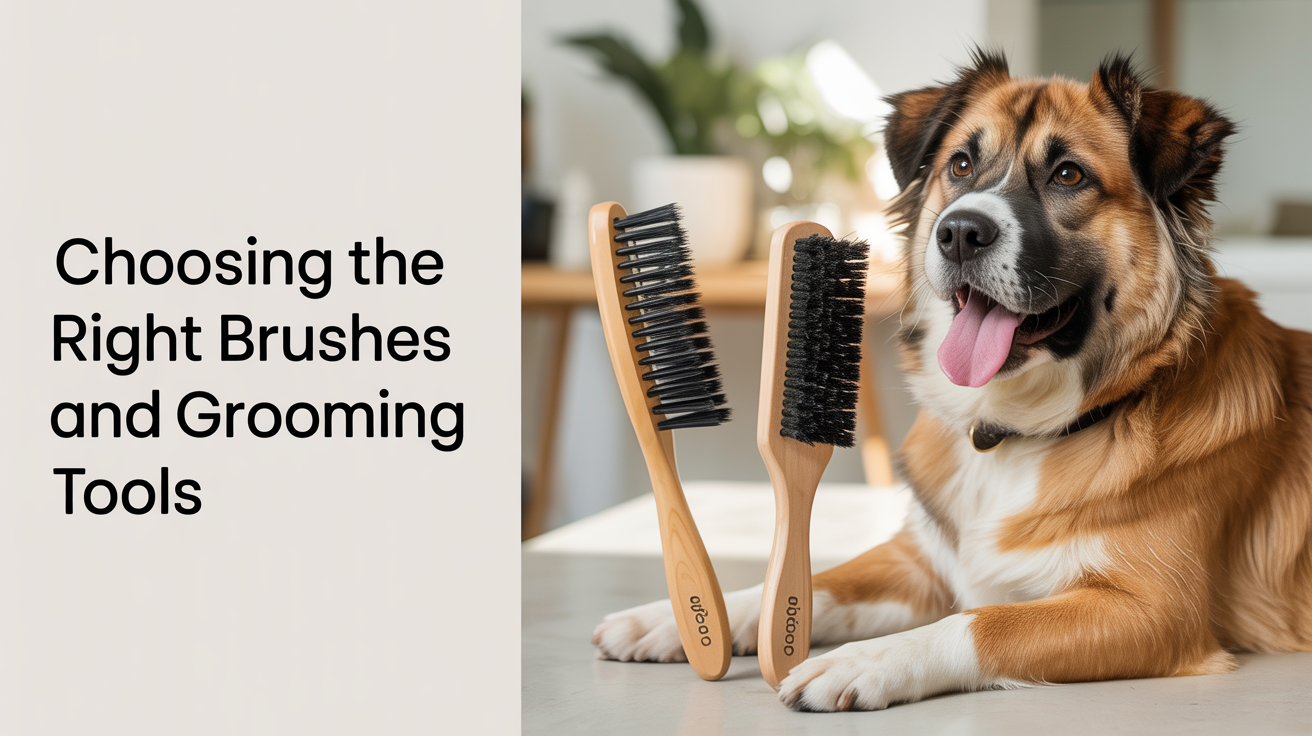
Walk into any pet store and the grooming aisle can feel overwhelming. There are pin brushes, slicker brushes, deshedding rakes, rubber curry combs, dematting tools, and finishing sprays all vying for your attention. The good news is that you do not need most of them. The right dog grooming tools for your household come down to one thing: your dog's coat.
Get that right and the rest falls into place. Get it wrong and you end up with a drawer full of brushes that do nothing useful, and a dog who tolerates grooming instead of enjoying it.
Why Coat Type Is the Starting Point
Every coat type has a different structure, and that structure determines what tools move through it cleanly without pulling or snapping hair.
A short, smooth coat on a Beagle or Boxer has tight, flat hair that lies close to the skin. Very little gets trapped in it. A soft bristle brush or rubber curry mitt is usually all you need to lift loose hair and distribute skin oils. A slicker brush on this coat is overkill and can scratch the skin if pressed too hard.
A double-coated breed like a Labrador or German Shepherd has a dense undercoat beneath a coarser topcoat. This coat sheds in waves and can build up into mats along the underside, behind the ears, and around the collar. These dogs need a tool that reaches through the topcoat to move the undercoat before it clumps.
A long, silky coat on a Maltese or Afghan Hound tangles easily, especially in friction spots like the armpits and the back of the legs. Regular, gentle detangling with a pin brush and a wide-tooth metal comb prevents the kind of full-body mat job that requires a professional.
A curly or wavy coat on a Poodle cross or a Cocker Spaniel does not shed much but the loose hair curls back into the coat and forms mats close to the skin. A slicker brush and a metal comb are essential here because matting happens faster than it looks.
A wiry or hand-stripped coat on a terrier has a rough texture that protects the dog outdoors. These coats typically need a pin brush for maintenance and a stripping comb or stripping knife if you want to preserve the texture properly.
For a deeper look at matching tools to what your dog actually has on their back, read our guide on how to brush your dog based on their coat type.
The Core Brushes and What They Do
Once you know your dog's coat, the tool list gets much shorter.
Slicker brush. This is a flat or slightly curved brush with fine wire pins set close together in a flexible pad. It loosens surface tangles, lifts loose hair, and finishes the coat so it lies flat. It is the most versatile brush in grooming and works on most coat types except very short or very wiry hair. Press lightly. The pins are fine enough to scratch the skin if you lean into them, and they do not need much pressure to do their job.
Pin brush. This looks like a human paddle brush but with longer, rounded pins. It is gentler than a slicker and better suited to long, silky, or wavy coats where you want to move through the hair without pulling it tight. It is also good for daily maintenance between more thorough grooming sessions. The rounded pins bend hairs aside rather than catching them, which makes it a good first step on a tangled coat before you bring in the slicker.
Bristle brush. Natural or synthetic bristles on a flat back. This does not detangle, but it does distribute coat oils and polish the outer layer. It is the finishing tool for short and smooth coats, and a good last step on any coat after you have done the main brushing work. For a short-coated dog like a Pointer or a Dachshund, this might be the only brush you need.
Rubber curry comb or grooming mitt. A rubber tool with soft nubs that you either hold in your hand or slip over it like a glove. Excellent on short, smooth coats for massage and loose-hair removal, and good for scrubbing during a bath. Dogs that resist brushes often accept a grooming mitt because it feels closer to a hand petting them.
Undercoat rake. A wide-toothed comb with longer, rotating teeth designed to move through a double coat and drag out undercoat. For breeds like Huskies, Corgis, Golden Retrievers, and Chows, this tool does what a slicker simply cannot reach. The rotating teeth are important; they reduce pulling and are much kinder to the dog than a fixed-tooth rake.
Metal comb. A simple metal comb with both wide-set and close-set teeth is one of the most useful tools in any grooming kit. It finds mats the brush missed, checks that you have worked all the way down to the skin, and finishes curly and wavy coats. Run the comb through after the brush. If it catches, go back and work that area again. If the comb moves freely from root to tip, the coat is fully brushed out.
Slicker Brush vs Undercoat Rake: Picking the Right One First
For owners with double-coated dogs, this is the question that comes up most often. The answer depends on what the coat looks like right now.
If the coat is relatively maintained and you are brushing weekly, start with the slicker. Work section by section, lift the hair from the roots, and follow with the metal comb.
If the coat has not been brushed in a while and there is visible puffiness or clumping in the undercoat, start with the undercoat rake. The rake loosens and removes the bulk of the dead undercoat first. Then follow with the slicker to tidy the topcoat and lay it smooth. Finish with the comb to check your work.
Using the slicker first on a coat with heavy undercoat buildup is frustrating because the slicker skims the surface and leaves the dense layer underneath untouched. You end up brushing for a long time without getting anywhere.
A table showing quick coat-to-tool pairings:
| Coat Type | Primary Brush | Secondary Tool |
|---|---|---|
| Short / smooth | Rubber curry or bristle brush | Metal comb for inspection |
| Medium double coat | Slicker brush | Undercoat rake + metal comb |
| Heavy double coat | Undercoat rake first | Slicker + metal comb |
| Long silky | Pin brush | Metal comb, slicker for mats |
| Curly / wavy | Slicker brush | Metal comb after every session |
| Wiry | Pin brush | Stripping comb (for hand-stripping) |
Building Out the Rest of the Kit
Brushes handle the coat, but a complete at-home grooming kit needs a few more things.
Nail clippers or a grinder. This is where many owners feel least confident. Keeping nails at a comfortable length matters more than it looks, because overgrown nails put pressure on the toe joints over time. Guillotine-style clippers work well for small dogs with thin nails. Scissor-style clippers handle medium to large breeds better. A rotary nail grinder files the nail smooth gradually and is useful for dogs that panic at the sound of a clip. Our detailed walkthrough on how to trim dog nails without the stress covers technique and how to avoid the quick.
Dematting comb or mat splitter. If your dog's coat is prone to matting, a mat splitter with serrated blades cuts through a mat so you can work it apart rather than ripping through it with a brush. Use this carefully and work from the outside of the mat inward, not from the base.
Dog-specific shampoo and conditioner. Human shampoos are formulated for a skin pH that is different from a dog's, and using them regularly can dry out the coat or irritate the skin. Keep a bottle of dog shampoo suited to your dog's coat type. If your dog has a dry coat, a conditioning rinse after the shampoo helps. Bathing is a natural extension of brushing; see our full guide to bathing your dog at home using a simple, low-stress routine.
Ear cleaning solution. A dog with floppy ears or a lot of ear hair is prone to wax buildup and moisture. A simple vet-recommended ear cleaning solution applied with a cotton ball during grooming sessions keeps the ears clear. Never insert a cotton swab into the ear canal.
Styptic powder. If you clip nails at home, keep styptic powder nearby. It stops the bleeding quickly if you catch the quick. A small container goes a long way.
Frequency and Routine
The best grooming routine is the one that fits your schedule and your dog's coat honestly.
Short-coated dogs can get away with a weekly once-over with a rubber curry or bristle brush. Double-coated dogs do better with two or three sessions per week, especially during seasonal shedding. Long and curly coats often need daily light brushing to stay ahead of tangles.
Starting young helps. A puppy that learns grooming is a normal, calm part of the week will be much easier to work with as an adult. Keep early sessions short and positive, use treats freely, and stop before the dog becomes restless.
For an adult dog that is new to grooming, work in stages. A few minutes each day building toward a full session is more effective than one long session that leaves the dog uncomfortable and wary the next time.
Frequently Asked Questions
Do I need a special brush for a dog that sheds a lot?
Yes, if your dog has a double coat. A standard slicker brush handles the topcoat but leaves the dense undercoat mostly untouched. An undercoat rake or a rotating-tine deshedding tool moves through the undercoat and removes the loose hair before it falls out around your house. Using both in sequence makes a noticeable difference during heavy shed periods.
Is a slicker brush safe for puppies?
A slicker brush is safe for puppies as long as you use very light pressure. Puppy skin is more sensitive than adult skin, and the fine pins can scratch if you press down. Many people find a soft pin brush or a rubber grooming mitt easier to use on puppies because the risk of discomfort is lower. Build the habit first; you can switch tools as the dog grows.
How often should I replace my grooming tools?
A metal comb and a well-made pin brush can last years. Slicker brushes wear out faster because the fine pins bend over time, especially if used on heavy coats. Inspect the pins regularly. If they no longer spring back and sit flat, the brush is past its useful life. Rubber curry combs and grooming mitts last a long time with occasional washing.
Can I use the same brush on multiple dogs?
Functionally, yes. Hygienically, it depends. If both dogs are healthy and live together, sharing a brush is generally fine with regular cleaning. If one dog has a skin condition, ear mites, or a ringworm diagnosis, keep tools separate until the issue is resolved.
My dog hates being brushed. What should I do?
Start with the gentlest tool available for the coat type, often a rubber curry mitt or a soft pin brush. Work for only a minute or two at first, pair the session with high-value treats, and stop before the dog shows stress signals like pulling away or stiffening. Over several weeks, gradually increase the duration. If the dog has learned to truly fear grooming from a previous bad experience, working with a reward-based trainer can help reset that association.