Grooming & Coat Care
How to Trim Dog Nails Without the Stress
How to trim your dog's nails safely at home, find the quick, avoid cutting too far, and build calm with clippers or a grinder one step at a time.
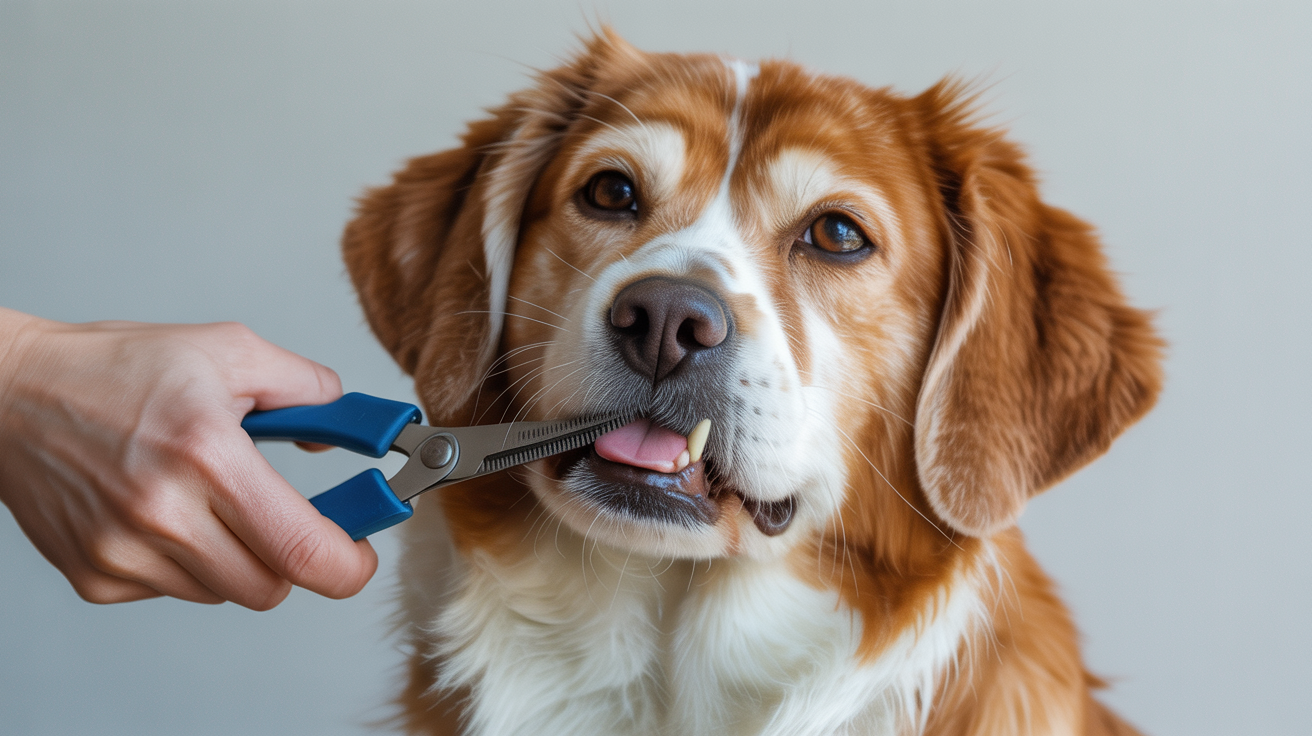
Most dogs dislike nail trims, and most owners dread them. The good news is that learning how to trim dog nails is mostly a matter of understanding what you're looking at and building a slow, positive routine around it, much like the Humane Society's at-home grooming walkthrough recommends taking a little at a time. Once you can reliably find the quick and take off just enough nail each session, the whole thing gets a lot less dramatic for both of you.
At a Glance
- The quick is the pink or dark core inside the nail that bleeds and hurts if you cut it, everything you do is built around avoiding it.
- Take thin slices and stop at the first gray or pink dot on the cut face, especially on dark nails where you can't see the quick directly.
- A good rule of thumb from the ASPCA's grooming guide: trim when the nails just touch the ground as your dog walks.
- Most dogs need a trim every 3-6 weeks; indoor dogs on soft surfaces need it more often than dogs who wear nails down on pavement.
- If you nick the quick, styptic powder (or cornstarch in a pinch) stops the bleeding in under a minute, it looks worse than it is.
- Fearful dogs need weeks of short, treat-heavy sessions before a full trim, not one long session pushed through.
What you're working with: nail anatomy
A dog's nail has two parts you need to know. The outer shell is hard, dead keratin, the part you cut. Inside it runs the quick, a bundle of blood vessels and nerves that extends from the base of the nail toward the tip. Cut into the quick and you'll get bleeding and a yelp. Leave nails too long and the quick grows further out, making future trims harder.
On dogs with light-colored or white nails, the quick shows up as a pink core when you look at the nail from the side. On dark or black nails, you can't see it directly. Instead, look at the cut face of the nail as you trim small slices: the nail starts as chalky white or gray, then transitions to a darker, slightly moist-looking center with a small gray or pink dot in the middle. That dot means you're one slice away from the quick, stop there.
The quick isn't fixed in place. It grows along with the nail when nails are left long, which is why an overgrown dog's nails need a gradual reduction over several sessions rather than one aggressive cut back to a "normal" length. Trimming a little more often is what actually shortens the quick over time, not cutting harder on any single visit.
Tools: clippers vs. a grinder
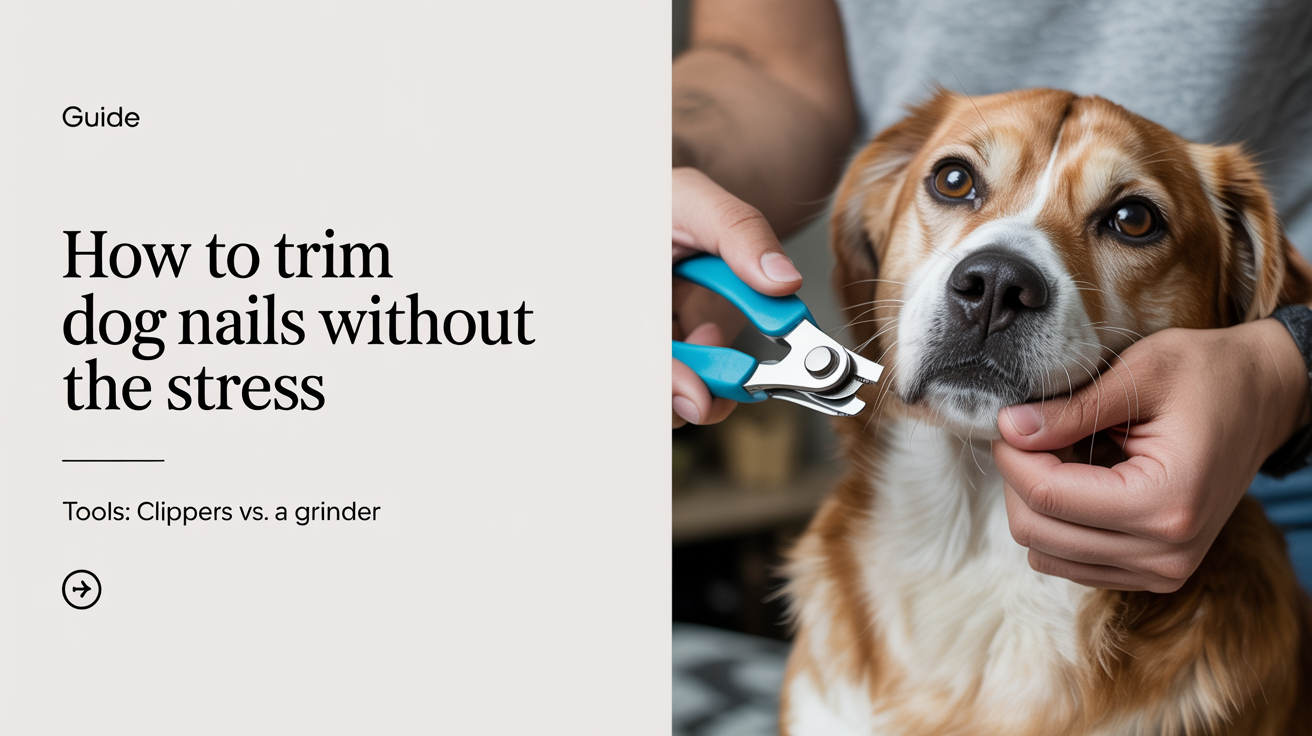
Both work. The choice comes down to your dog's tolerance and your own comfort.
| Tool | Best for | Downsides |
|---|---|---|
| Scissor clippers | Most dogs; thick or large nails | Requires confident, clean cuts |
| Guillotine clippers | Small breeds, thin nails | Blade dulls faster; less force control |
| Dremel / grinder | Dogs scared of the snipping sensation; dark nails | Noise and vibration need desensitization |
| Scratch board (sandpaper pad) | Front nails only; very dog-driven | Slow; only works if dog is motivated |
If your dog already panics at clippers, a Dremel dog nails approach can help, the grinding is gradual and you control exactly how much material you remove. The tradeoff is that you need to desensitize your dog to the sound and buzz separately before you ever touch their paws with it. Start by running it nearby during meals for a few days before you try to use it.
Sharper blades make a real difference with clippers. A dull blade crushes the nail rather than cutting cleanly, which feels worse and can cause cracking. If your clippers are more than a year old and see regular use, replace them or buy a new blade. A rough guide: a well-used pair of clippers on a medium or large dog is worth replacing every 12-18 months; light use on a small dog can stretch closer to two years.
How to cut dog nails safely, step by step
Prepare the dog before you start. Don't go straight to clipping. Pair handling with treats, hold a paw, give a treat, release. Do this daily for a week before your first actual trim if your dog is anxious. The goal is for the dog to connect paw handling with good things, not brace against it.
Get comfortable positioning. For small dogs, sitting on the floor with the dog in your lap works well. For large breeds, have them lie on their side on a mat, or ask a helper to hold them gently in a standing position. Trying to trim a dog while they're squirming and upright is how accidents happen.
Take the nail from below, not above. Hold the paw and look at the underside of the nail, not the top. Cut at roughly a 45-degree angle, aiming to follow the natural curve of the nail tip. On most dogs, a conservative trim means taking off just the hook that curves downward past the pad line. The ASPCA's grooming guide describes the same approach: cut from top to bottom at a slight angle rather than side to side, taking a small length through the trimmer's opening each pass.
Take small slices. This is how you cut dog nails safely without hitting the quick, you don't need to remove everything in one cut. Take 1-2 mm at a time, look at the cut face, and stop when you see the central gray or pink dot appear.
Do all four paws and the dewclaws. Dewclaws (the higher nail on the inner leg, present on most front feet and some back feet) don't touch the ground and grow faster than the others. They curl around and grow into the paw pad if neglected. Check them every time.
Use styptic powder if you nick the quick. Kwik Stop or any styptic powder stops bleeding in under a minute. Cornstarch works in a pinch. Press it against the nail tip with light pressure. Bleeding from a quicked nail looks alarming but is minor; keep the dog calm, apply the powder, and move on.
Finish with an emery board. A quick pass smooths any rough or sharp edges left by the clipper. It's a small step, but it stops the nail from snagging on carpet or scratching skin during play, and it takes about ten seconds per paw.
How often to trim
The standard advice is every 4-6 weeks, but it varies more than that in practice.
| Situation | Trim frequency |
|---|---|
| Active dog on concrete/pavement | Every 6-8 weeks (natural wear helps) |
| Mostly indoor dog on carpet/grass | Every 3-4 weeks |
| Senior dog, less active | Every 3-4 weeks; nails thicken with age |
| Puppy (growing fast) | Every 2-3 weeks during the first year |
| After a quick has been cut too short | Weekly light trims to help the quick recede |
The real test is sound: if you can hear your dog's nails clicking on hard floors, they're overdue. Nails that are too long start to affect how the dog loads weight on their feet, which over months contributes to joint stress and changes in gait. A simple visual check backs up the sound test too: with the dog standing normally, the nail tip shouldn't extend past the pad when viewed from the side.
Building a calmer routine
If your dog is already fearful of nail trims, don't try to push through a full trim in one session. It will get worse, not better. The approach that actually works is called desensitization and counter-conditioning, you change what the dog feels about the stimulus by pairing it repeatedly with something good.
A rough progression that works for most dogs:
- Week 1-2: Touch paws, give treats. Clip clippers near the dog without touching, give treats.
- Week 3: Touch the clippers to nails without cutting, give treats.
- Week 4: Cut one nail, end the session with several treats and play.
- Week 5+: Gradually add more nails per session as tolerance improves.
High-value treats matter here. Most dogs who won't tolerate nail trims for a piece of kibble will sit through a full session for small bites of boiled chicken or cheese. The treat only works as a counter-conditioner if it's genuinely exciting to the dog.
Some owners find it helpful to weave nail trims into a broader grooming routine that the dog already tolerates, after a bath, for instance. A dog who's calm and slightly tired from a low-stress bath at home is often more cooperative than one being grabbed off the couch cold.
If progress stalls at any point in this progression, that's usually a sign the previous step wasn't as solid as it seemed. Go back one step, run it for a few more sessions, and only move forward once the dog is relaxed and taking treats calmly, not just tolerating the handling.
When to ask for help
A professional groomer or vet tech can trim nails faster than most owners because they've done thousands of them and have a confident, quick approach. There's no shame in outsourcing this, especially while you're working on desensitization at home.
See a vet if:
- A nail is broken at the base or growing into the pad
- You see swelling, discharge, or the dog is consistently lame on one foot
- The quick has been significantly damaged and doesn't stop bleeding within 10-15 minutes with pressure
- Nails have curved so far they've penetrated the pad
These are medical situations, not grooming ones.
If nail care is part of a broader grooming habit you're building, it's worth reading about how to brush your dog based on their coat type and how to clean your dog's ears safely, all three tend to go together, and getting comfortable with paw and ear handling makes each easier over time.
Frequently asked questions
What do I do if I cut the quick?
Stay calm, because your dog will take cues from you. Press styptic powder or cornstarch firmly against the nail tip for 30-60 seconds. The bleeding almost always stops within a couple of minutes. Give the dog a high-value treat, end the session on a positive note, and don't attempt any more nails that day. The nail itself heals fine; the bigger concern is not making the dog more fearful for next time.
My dog has black nails and I can't see the quick at all. How do I know when to stop?
Cut in thin slices and check the cut face of the nail each time. When the center of the nail shifts from chalky or dry-looking to a darker, slightly glossy ring with a small dot at the center, stop. That dot is the start of the quick. If you're genuinely uncertain, take off less than you think you need to, a conservative trim every three weeks beats an aggressive one every six.
Is a Dremel better than clippers for anxious dogs?
Sometimes, but not automatically. Some dogs who panic at the snipping action of clippers are perfectly fine with a grinder. Others find the noise and vibration just as alarming. The Dremel approach works best when you take the time to desensitize the dog to the sound and buzz before using it on nails, run it near them at mealtimes for a week or two before the first actual grind. If done right, it gives you excellent control and removes the risk of a sudden snip.
How long does it take to recede a quick that's grown too long?
Consistent light trims every 7-10 days, taking just the tip of the nail each time, will cause the quick to gradually recede. Most people see meaningful change in 4-8 weeks. The more often you trim, the faster it happens, the quick recedes in response to stimulation at the nail tip. One trim a month won't do it.
At what age should I start trimming a puppy's nails?
As soon as possible, ideally the first week you bring the puppy home. Puppy nails are thin and soft, so they're easy to trim and a nick causes minimal bleeding. More importantly, starting early means paw handling and clippers become normal before the puppy has a chance to form a negative association. Puppies who have their nails trimmed regularly from 8-10 weeks of age are dramatically calmer about it as adults.
How much nail is actually safe to remove in one trim?
On a nail that hasn't been let go too long, a conservative first cut is usually just the curved hook past where the nail meets the pad line, about 1-2 mm. If the nail is significantly overgrown, resist the urge to cut it back to a "normal" length in one session. Take the same small amount off every 1-2 weeks instead, and let the quick recede naturally rather than risking a cut that's too deep.
Do I need to trim the same amount on every paw?
Not necessarily. Front nails usually grow faster than back nails because dogs bear more weight on their front feet and use them more for digging and scratching. Check all four paws at every session, but don't be surprised if the front nails need attention more often than the back ones.