Gear & Essentials
Food and Water Bowls: Slow Feeders and Elevated Stands
A practical guide to choosing the best dog bowls: stainless vs. ceramic, slow feeder designs, elevated stands, and daily hygiene tips for every dog.
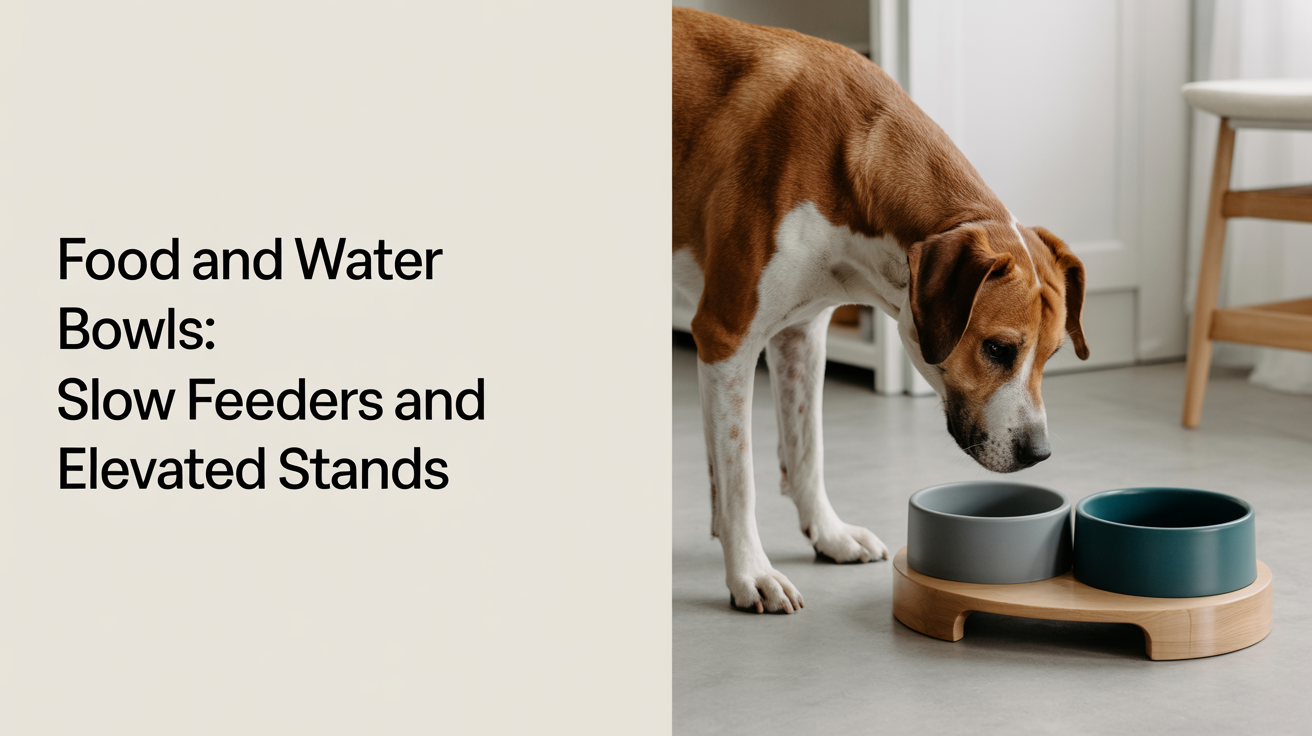
Walk into any pet store and the bowl aisle can feel overwhelming. There are stainless options, ceramic options, plastic ones in every color, slow feeders with ridges or mazes, and raised stands that come at three different heights. The good news: once you know what actually matters, the decision becomes straightforward. This guide covers material differences, when a slow feeder is worth the upgrade, the real story on elevated bowls, and a few things worth avoiding.
Stainless Steel, Ceramic, or Plastic: Which Material Actually Matters
The short answer is that stainless steel and ceramic are the two materials worth spending money on. Here is why each one earns its place.
Stainless steel is the most practical choice for most households. It does not harbor bacteria the way other surfaces can, it survives dishwasher cycles without degrading, and it does not scratch easily. Scratches on any bowl surface give bacteria somewhere to hide, so a material that resists them is a genuine hygiene advantage. Stainless bowls are also light enough to carry outside, drop-resistant, and widely available. The main downside is that some dogs, particularly noise-sensitive ones, dislike the clanging sound when their collar tag hits the bowl.
Ceramic bowls are heavier, which makes them useful for dogs who push their bowl around the kitchen while eating. They come in a range of sizes and are easy to clean. The thing to watch for is lead-free, food-safe glaze, especially on imported options. A chip or crack is cause to replace the bowl immediately since bacteria can colonize the exposed surface beneath the glaze.
Plastic bowls are the one type worth avoiding as a primary feeding vessel, especially for dogs who use them daily. Even "BPA-free" plastic develops surface micro-scratches over time, and those scratches trap bacteria that regular washing does not fully remove. Some dogs also develop contact hypersensitivity around their muzzle from repeated plastic exposure. Plastic travel bowls that fold flat and get used occasionally on hikes are a different story, but for daily meals at home, there are better options.
When a Slow Feeder Bowl Is Actually Worth It
A slow feeder bowl has ridges, raised posts, or a maze-like pattern that forces a dog to work around obstacles to reach their kibble. They are not just a novelty. For dogs who finish a standard bowl in under a minute, a slow feeder addresses a real feeding habit.
Dogs who eat very fast often swallow significant amounts of air along with their food. This can cause bloating and discomfort and, in large and deep-chested breeds, has been associated with the risk of gastric dilatation. Slowing the eating pace reduces air ingestion and helps the dog feel fuller before they have cleaned the bowl.
Slow feeders also provide a small amount of mental work during mealtime. A dog who has to nose around ridges to find kibble engages parts of their brain that a standard bowl does not require. For high-energy dogs or those who eat quickly out of habit, this can be a useful way to add low-level enrichment to an otherwise uneventful routine.
The two types worth knowing:
- Maze or ridge feeders: flat or shallow bowls with raised internal patterns. Work well for kibble and wet food. Easy to clean. Most dishwasher safe.
- Lick mats: flat mats with textured surfaces where wet food, peanut butter, or pureed food is spread. Slower than a maze feeder and more calming by nature. A useful tool for dogs who gulp wet food or need to settle before or after exercise.
If your dog finishes a normal bowl in 30 seconds or fewer, a slow feeder is a practical buy, not an optional luxury.
Elevated Dog Bowls: What the Evidence Actually Says
Elevated stands lift the food and water bowls off the ground, usually to somewhere between four and twelve inches depending on the size of the stand. The appeal is intuitive: a bowl at a more natural height seems like it would be easier on the neck and back, especially for large or older dogs.
The reality is more nuanced. There is some evidence that elevated feeders reduce discomfort for dogs with conditions like megaesophagus, where food needs to travel upward by gravity rather than through normal muscular contraction. For dogs with arthritis in the neck or front legs, eating at a raised height can reduce strain during meals.
However, some research has suggested that elevated bowls may actually increase the risk of bloat in large, deep-chested breeds, though the findings are not conclusive and the topic is still debated among veterinarians. If your dog is a large, deep-chested breed and you are considering an elevated stand, this is a good question to raise with your vet before making the switch.
For medium and small breeds in good health, there is no strong evidence that elevation is either necessary or harmful. If your dog eats comfortably from a floor-level bowl, there is no compelling reason to change.
The clearest case for an elevated stand is a senior dog with joint issues, where reducing the distance they have to bend down to eat has an obvious comfort payoff.
Bowl Hygiene: The Part Most People Skip
Whatever bowl material you choose, how often you wash it matters more than most owners realize. Bacteria colonize the surface of a dog bowl quickly. Biofilm, the slick layer that forms on the inside of a bowl that has not been washed recently, builds up after a single day of normal use.
A practical approach:
- Wash food bowls after every meal. Kibble leaves a film even when the bowl looks empty.
- Wash water bowls daily and refill with fresh water. The slippery feeling inside a water bowl that has sat for two days is biofilm.
- Run bowls through the dishwasher at least a few times per week if you are hand-washing them daily between meals. Dishwasher heat sanitizes more thoroughly than hand washing.
- Replace any bowl that has developed scratches deep enough to feel with a fingernail. On ceramic, replace immediately if any chip or crack appears.
Dogs who drink from standing water in the yard, from puddles, or from a communal bowl at the dog park are exposed to far more bacterial load than a clean bowl at home. Keeping home bowls consistently clean is an easy baseline.
Sizing and Placement
Bowl size should match roughly how much your dog eats at one sitting, with a little room to spare. A bowl that is too large does not cause harm, but it makes it harder to see how much your dog has actually eaten during the meal.
Placement is worth thinking about briefly. Dogs generally eat more comfortably when the bowl is on a non-slip surface and in a quieter part of the room. Some dogs are guard-prone around their food and do better in a corner or against a wall rather than in the open middle of the kitchen. Feeding in the same spot each day also becomes part of a routine that most dogs find settling.
For multi-dog households, separate bowls in separate locations prevent competition during mealtimes. Even dogs who appear friendly with each other can show tension around food if the bowls are placed too close together.
Frequently Asked Questions
Do I need a slow feeder if my dog does not seem to have any digestion issues? Not necessarily, but fast eating is worth addressing before problems develop. If your dog finishes meals in under a minute and seems to inhale food rather than chew it, a slow feeder is a low-cost way to build a better habit. You do not need to wait for bloating or regurgitation to make the switch.
Are elevated bowls safe for large breeds? The research is mixed. Elevated bowls have a logical comfort appeal for large, arthritic dogs, but some studies have suggested an association with bloat risk in deep-chested breeds. If you have a large, deep-chested breed like a Great Dane, Irish Setter, or standard Poodle, talk to your vet about whether elevation makes sense for your specific dog.
How do I get my dog to use a slow feeder if they are frustrated by it? Start by putting a small amount of food in the slow feeder alongside a regular bowl. Let them get used to working around the ridges with a lower-stakes amount of food. Over a few days, gradually shift the full meal into the slow feeder. Most dogs adjust within a week.
How often should I replace dog bowls? Stainless steel bowls last for years if they are washed regularly and show no deep scratches or rust. Ceramic bowls should be replaced if they chip or crack. Plastic bowls wear out faster and are worth replacing at least annually if used daily. When in doubt, run a fingernail across the interior surface and replace any bowl that has visible scratches.
Can my dog drink from the same bowl I use for their food? It is cleaner to use separate bowls for food and water. Food residue that ends up in a water bowl accelerates bacterial growth. Keeping them separate makes it easier to clean both properly and track water intake.
Houndwise is an independent dog-care resource. Our guides are researched and written in-house; we are not affiliated with, endorsed by, or sponsored by any brand, product, breeder, or veterinary practice we mention. Nothing here is a substitute for professional veterinary advice. When your dog's health is in question, talk to your own vet.
For more on setting up your dog's daily routine, see our guides on choosing and fitting a dog harness, picking the right crate size and type, and choosing a dog bed that actually lasts.