Gear & Essentials
Picking a Dog Bed That Actually Lasts
How to pick a dog bed that lasts: choosing the right size and type, orthopedic options for older dogs, and what makes a bed harder to destroy.
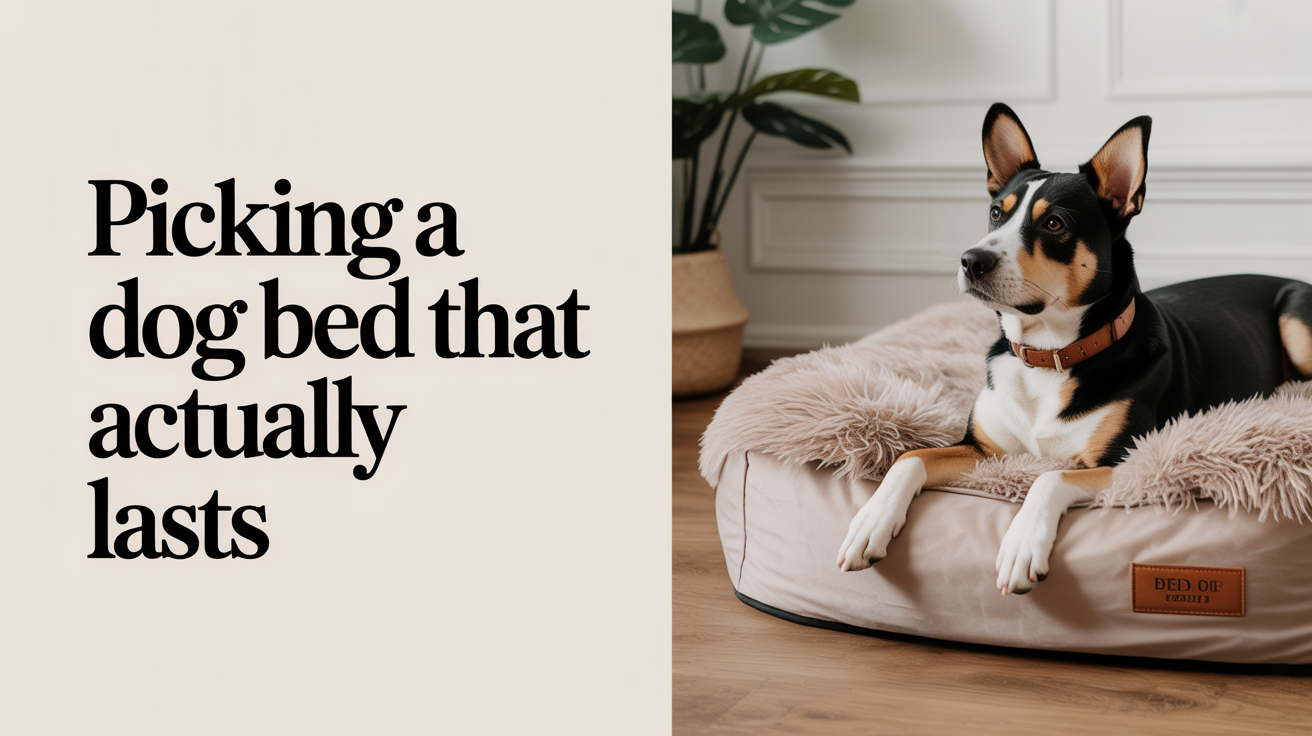
Most dog beds end up in the trash within six months, not because dogs are impossible to shop for, but because owners pick the wrong type for their dog's habits and size. The best dog bed for your situation depends on three things: how your dog sleeps, how hard they are on stuff, and whether their joints need extra support. Get those three right and you'll stop replacing beds every season.
Sizing it correctly
Dog bed sizing labels are optimistic. A "large" bed from one brand can be 10 inches shorter than a "large" from another. Measure your dog instead of trusting the chart.
Have your dog lie down in their natural sleep position and measure from nose to tail base. Add 8-10 inches to get the minimum bed length. For width, measure shoulder to shoulder when they're sprawled sideways and add 6 inches. Dogs who curl tight need less room; sprawlers and dogs who sleep on their backs need more.
Dog bed size guide by weight (rough starting point):
| Dog weight | Minimum bed length | Recommended style |
|---|---|---|
| Under 15 lb | 20-24 in | Bolster or nest bed |
| 15-40 lb | 28-34 in | Bolster or flat mat |
| 40-70 lb | 36-42 in | Flat mat or orthopedic |
| 70-100 lb | 44-50 in | Large orthopedic or cot |
| 100 lb+ | 52+ in | XL orthopedic or cot |
If your dog sleeps pressed against a wall or furniture, they often prefer a bed with a bolster on at least one side. If they sprawl flat in the middle of the floor, a bolster just gets in their way.
Bed types and who they're for
Flat mats and pillow beds are the simplest option. They work well for young, healthy dogs without joint issues who sleep in any position. They're easy to wash, inexpensive, and can be stacked for more cushion. The downside is they compress quickly with heavy or active dogs.
Bolster and donut beds have raised edges that dogs can rest their heads or backs against. Good for dogs who like to curl up or sleep pressed against something. Smaller breeds and anxious dogs often settle better in this style.
Elevated cots (also called raised or cot-style beds) are mesh or canvas stretched over a frame. They're the most durable option for heavy chewers who haven't yet destroyed the legs. They keep dogs off cold floors, allow airflow underneath (helpful in summer), and many are machine-washable or simply hosed off. Not ideal for dogs with arthritis who struggle to step up.
Orthopedic beds use memory foam or high-density supportive foam rather than fiberfill. Worth the price for senior dogs, large breeds, dogs recovering from surgery, and any dog with diagnosed joint issues. More on this below.
Cave or hooded beds have a flap or hood that dogs can burrow under. Greyhounds, whippets, small terriers, and anxious dogs often strongly prefer them.
Orthopedic beds: when they're worth it
The word "orthopedic" gets slapped on a lot of beds that are just marketing. A genuinely supportive orthopedic bed uses solid memory foam or a layered foam system (a firm base with a softer top layer). The foam should be at least 3-4 inches thick for a medium dog and 5-6 inches for a large one. Cheap fiberfill doesn't do the same job regardless of what the label says.
When does an orthopedic bed actually matter? For dogs with hip or elbow dysplasia, arthritis, or dogs recovering from orthopedic surgery, a supportive surface reduces pressure on joints and makes it easier for them to get up and lie down. Large breeds like Labradors, German Shepherds, and Great Danes are worth putting on a quality orthopedic bed before problems show up, since they're statistically prone to joint issues as they age.
A practical test: press your palm flat into the foam. If it bottoms out and you feel the floor, the foam is too thin or too soft for your dog's weight. The foam should compress slowly and push back.
Waterproof liners under the removable cover are worth paying extra for. Old dogs and dogs with incontinence issues will leak, and foam that gets saturated is nearly impossible to dry fully and will mold.
Chew-proof and durable options
No bed is truly indestructible if a motivated dog decides to work on it. But some materials hold up much longer than others.
Ballistic nylon and Cordura fabric are the toughest cover materials available. Many elevated cots use them. Reinforced stitching and double-sewn seams matter more than the fabric alone. If the seams pop, a dog with any interest in pulling threads will disassemble the whole thing in an afternoon.
What helps with chewing:
- Elevated cots with aluminum or powder-coated steel frames (the frame itself is rarely chewed, and the fabric is harder to grip)
- Covers with no exposed zippers on the top surface (zipper pulls are often the first thing chewed)
- Beds filled with shredded foam rather than polyfill (less satisfying to gut, slower to destroy)
- Avoid beds with attached stuffed toys or sewn-on rope accents if your dog chews
For dogs who chew out of boredom or anxiety, the bed itself isn't the real problem. Giving them enough exercise and appropriate chew toys before settling time reduces destructive behavior more than any product upgrade. If chewing is a significant behavioral issue, it's worth reading through how collars, leashes, and long lines work to think about management and exercise options as part of the picture.
Washing and maintenance
A bed that can't be washed regularly isn't worth keeping. Dogs shed, drool, track in dirt, and sometimes have accidents. Washing frequency depends on the dog, but most beds benefit from a wash every 1-2 weeks for short-coated dogs and weekly for heavy shedders or dogs who spend time outside.
Look for:
- Removable, machine-washable covers with a zipper that won't jam or break after a few washes
- Covers that can go in the dryer (line-drying is fine but takes longer)
- Foam inserts that can be spot-cleaned or, at minimum, aired out
Memory foam inserts generally can't be machine washed. Spot-clean them with a mild detergent and water, then let them air dry completely before putting the cover back on. A damp foam insert back in a cover grows mold fast.
If you're setting up a new dog's space alongside a crate, the bed sizing logic applies there too. A bed that fits the dog but leaves some room in a crate tends to work better than one crammed edge-to-edge. The guide on choosing the right crate size and type covers how those dimensions interact.
Matching bed to life stage
A puppy's needs are different from a senior dog's, and what works at two years old won't necessarily work at ten.
| Life stage | What to prioritize |
|---|---|
| Puppy (under 1 year) | Washable, inexpensive (expect accidents and chewing), sized for adult weight |
| Adult, healthy | Comfort and durability for their sleep style |
| Senior (7+ for large breeds, 10+ for small) | Supportive orthopedic foam, low entry height, waterproof liner |
| Post-surgery/injury | Orthopedic, low to the floor, stable (doesn't shift when they step on edge) |
Buy a puppy bed sized for the adult dog, not the puppy. A Great Dane puppy is cute in a tiny bed for about three weeks.
If your dog wears a harness during walks or activities, the guide to choosing and fitting a dog harness is worth a look alongside this one — both come down to getting the measurements right and knowing which features matter for your specific dog.
Frequently asked questions
How do I know if my dog's bed is too small?
Watch where they actually sleep. If your dog consistently hangs their head, legs, or rear off the edge of the bed, it's too small. If they sleep on the floor next to the bed, it may be the wrong type (too soft, wrong shape, or in a spot they don't like). Size up at least one size and see if they use it more.
Are orthopedic dog beds really necessary, or is it marketing?
For young, healthy, small dogs, most standard beds are fine. For large breeds, senior dogs, or any dog with diagnosed joint problems, a quality memory foam orthopedic bed makes a real difference. The key is that the foam is genuinely supportive (3-6 inches thick depending on dog weight) and doesn't compress flat under the dog's weight. The word "orthopedic" alone on a label means nothing.
My dog keeps dragging their bed around and bunching it up. Why?
This is normal nesting behavior. Dogs often rearrange bedding to get it exactly where they want it. A heavier orthopedic bed stays put better than a thin mat. If it's bothering you, a bed with a non-slip bottom and a bolster edge they can push against tends to stay in place more.
How often should I replace a dog bed?
A good-quality bed should last 2-4 years with regular washing. Replace it when the foam has compressed and no longer springs back, when the cover has worn through, or when it can't be cleaned adequately. A flat, worn-out foam bed is worse for joints than no bed at all — the dog is essentially sleeping on the floor with a thin layer of fabric over it.
Can I wash a memory foam dog bed in the washing machine?
The foam insert itself, no. Most washing machines can't handle large foam blocks and the agitation damages the foam. Remove the cover (which is usually machine washable) and spot-clean the foam insert with mild soap and water, then let it dry fully before reassembling. Some beds have shredded foam fill instead of solid foam, and those inserts are sometimes machine washable on a gentle cycle — check the tag.