Training & Behavior
How to Curb Excessive Barking Without Yelling
Learn reward-based methods to stop dog barking, tackle demand barking, and teach a quiet command your dog will actually follow.
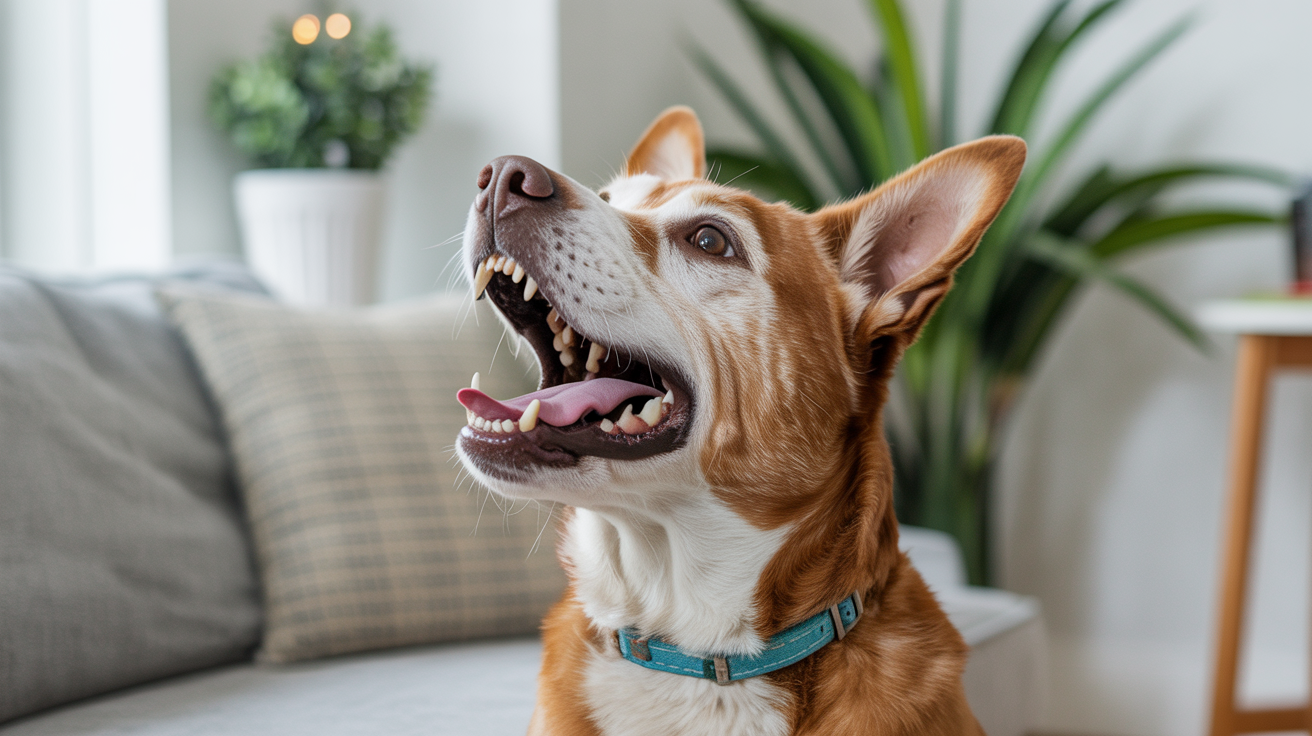
Your dog barks at the mailman, at squirrels, at absolutely nothing you can identify, and sometimes at you when dinner is three minutes late. You've tried saying "no," you've tried getting louder, and none of it has worked. That's because yelling at a barking dog often reads as you joining in. The fix is slower and quieter than that, but it actually sticks.
This guide covers why dogs bark excessively, how to address the most common patterns, and how to build a reliable quiet cue using positive methods.
Why Dogs Bark at Everything (and Why Yelling Makes It Worse)
Barking is normal dog communication. The problem isn't that your dog barks; it's the frequency, the trigger, or the intensity. Before you can address it, it helps to figure out which type of barking you're dealing with.
Alert barking happens when your dog notices something outside: a passing person, a car door, a rustling bush. The bark says "I noticed that." For many dogs, this is self-reinforcing because the thing (the mail carrier, the neighbor) eventually leaves, and the dog concludes the barking worked.
Demand barking is directed at you. The dog wants something: food, attention, a toy, to go outside. It often starts as one bark and escalates if you respond. Even looking at the dog or telling it to stop can count as a reward if the dog just wanted your attention.
Anxiety or frustration barking shows up when dogs are left alone, confined, or prevented from reaching something they want. This type often comes with other signs like pacing, whining, or destructive behavior and can warrant a conversation with your vet or a certified trainer.
Yelling doesn't work across all three categories because dogs don't interpret raised human voices the way we intend. To a dog, your loud "Quiet!" can sound like excited barking back, which reinforces the behavior, or like a threat that adds stress to an already aroused dog.
How to Teach a Quiet Command
The quiet command only works if your dog already has a reliable bark to start with, which sounds backwards but isn't. You need the bark to reward the silence.
Step 1: Trigger a controlled bark. Use whatever gets your dog going: knock on a wall, ring the doorbell on your phone, have someone stand outside. Let the dog bark two or three times.
Step 2: Calmly say "quiet" once. Don't repeat it. One clear cue.
Step 3: Interrupt the bark. Show your dog a high-value treat right at their nose. Most dogs stop barking to sniff. The moment the barking stops, even for two seconds, mark it (say "yes" or click) and give the treat.
Step 4: Extend the silence gradually. Over many sessions, wait a beat longer before marking. Three seconds, then five, then ten. You're building the dog's ability to hold the quiet, not just pause.
Step 5: Add distance and distractions slowly. Practice with the same trigger but stand a little farther from the door. Practice when the dog is more alert. Proof the behavior in different rooms.
A few things to keep in mind:
- Keep sessions short: five minutes or less. A tired or frustrated dog won't learn.
- Use the highest-value treats you have for this work. Barking is arousing and fun for many dogs, so the reward for stopping needs to compete with that.
- If the dog is barking so hard it can't notice the treat, you've started too close to the trigger. Increase distance.
Handling Demand Barking
Demand barking is frustrating because the natural response is to give in just to get peace. But every time you do that, you teach your dog that barking at you is a reliable strategy.
The core fix is extinction: stop the behavior from paying off.
Don't respond to the bark. No eye contact, no verbal response, no moving toward what the dog wants. Turn your back or leave the room calmly.
Wait for quiet, then deliver. The instant there's a pause in the barking (even a short inhale), go ahead and give the dog what it was asking for, if it's reasonable. You're not rewarding the bark; you're rewarding the quiet that followed.
Expect an extinction burst. Before demand barking fades, it almost always gets louder and more persistent. This is the dog doubling down because the old strategy isn't working. Hold your ground. If you give in during the burst, you've taught the dog to bark harder.
Build a more useful cue. Teach the dog to sit or go to a mat to ask for things instead. If sitting gets dinner and barking gets nothing, the sit will win out over time.
If your dog's demand barking is severe or has escalated to jumping, nudging, or resource guarding, a certified positive-reinforcement trainer can help you build a cleaner behavior chain.
Managing Alert Barking at Home
For dogs that bark at everything outside, management and counterconditioning work together better than either approach alone.
Reduce access to triggers. A dog that barks at passersby all day from a front window is rehearsing that behavior for hours. Block the view with a privacy film on the lower window pane, a piece of furniture, or simply keep the dog in a back room during peak foot-traffic hours. Less practice means a lower baseline.
Counterconditioning the trigger. Instead of correcting the bark, change how your dog feels about the trigger. When the mail carrier appears, immediately pair that sight with something good: a handful of kibble, a bite of cheese, a brief play session. You're not rewarding the bark; you're rewiring the emotional response so that "mail carrier = good stuff" rather than "mail carrier = threat to announce."
Teach an incompatible behavior. Train your dog to go to a specific spot (a bed, a mat) when someone approaches the door. A dog lying on its mat can't simultaneously be lunging at the window. Pair this with your quiet command. You'll find crate training a dog the calm, positive way helpful here if your dog also needs a safe, settled place during higher-traffic times.
Use a structured departure cue. Some dogs bark at visitors because they don't know what to do. Teaching "go to your place" gives the dog a job, which is often all they need to settle.
Common Barking Triggers and What to Do
| Trigger | Likely Type | First Step |
|---|---|---|
| Mail carrier, delivery person | Alert | Block window view; countercondition |
| Other dogs on walks | Alert or reactivity | Increase distance; reward calm attention |
| You leaving the house | Separation anxiety | Gradual departures; vet consult if severe |
| Dinnertime or play requests | Demand | Stop responding; reward quiet sits |
| Sounds outside at night | Alert | White noise machine; reward quiet |
| Strangers approaching | Alert or fear | Countercondition; don't force greetings |
Building Calmer Foundations Over Time
Quick fixes for barking rarely hold without broader impulse-control work. Dogs that are mentally and physically tired bark less than dogs that are bored and understimulated. A consistent daily routine that includes adequate exercise, structured training sessions, and appropriate chew or sniff opportunities lowers the overall arousal level your dog brings to triggers.
Recall and focus work also carries over. A dog that reliably checks in with you on cue is a dog that's paying attention to you rather than fixating on the environment. Teaching a reliable recall builds the same attention muscle you'll lean on during quiet command training. Leash manners matter too: a dog that's constantly pulling toward things on walks is in a high state of arousal, which makes barking more likely. Working on loose-leash walking helps bring that arousal down before you even get home.
If barking has been a long-standing habit, expect real progress to take weeks, not days. That's normal. Each quiet moment you reward is one more data point teaching your dog that silence pays off.
Frequently Asked Questions
Why does my dog bark at nothing? Dogs detect sounds and smells well outside the range of human perception. What looks like "nothing" to you may be a dog two streets away, a mouse behind the wall, or a vehicle frequency you can't hear. Alert barking at invisible triggers is very common, especially in dogs with strong guarding instincts. It usually responds to the same counterconditioning and window-management steps described above.
Is it okay to use a bark collar to stop excessive barking? Aversive tools like shock collars and citronella collars suppress the symptom without addressing why the dog is barking. They can also increase anxiety, which sometimes makes the underlying problem worse. Reward-based methods take longer upfront but produce more durable results and don't carry the same welfare risks. If you're considering a bark collar because you've hit a wall, a consultation with a certified trainer is a better next step.
My dog only barks when I'm not home. What should I do? Barking in your absence is usually tied to separation anxiety or boredom. Setting up a camera to observe what the dog actually does when you leave (barking the whole time vs. settling after a few minutes) helps you understand the scope. True separation anxiety often needs a structured desensitization protocol and sometimes veterinary support. If the barking is brief and your dog seems otherwise settled, enrichment before departures (a stuffed Kong, a scatter feed) may be enough.
How long does quiet command training take? Most dogs understand the basic cue within a week of daily five-minute sessions. Reliable performance around real triggers takes longer, usually several weeks to a few months depending on how entrenched the barking habit is and how consistently you practice. Consistency matters more than session length.
Should I consult a vet about excessive barking? Yes, if the barking is sudden and new (a medical issue or pain can cause behavior changes), if it's accompanied by other anxiety signs like house soiling or destruction when alone, or if it doesn't improve with consistent training. A vet can rule out underlying health causes and, if needed, refer you to a veterinary behaviorist or discuss whether anxiety medication might support the training process.
Houndwise is an independent dog-care resource. Nothing here is a substitute for professional veterinary advice. When your dog's health or well-being is in question, talk to your own vet.