Grooming & Coat Care
Paw and Pad Care for Every Season
Learn how to protect and care for your dog's paws year-round, from summer heat to winter salt, including how to spot cracked pads and when to use paw balm.
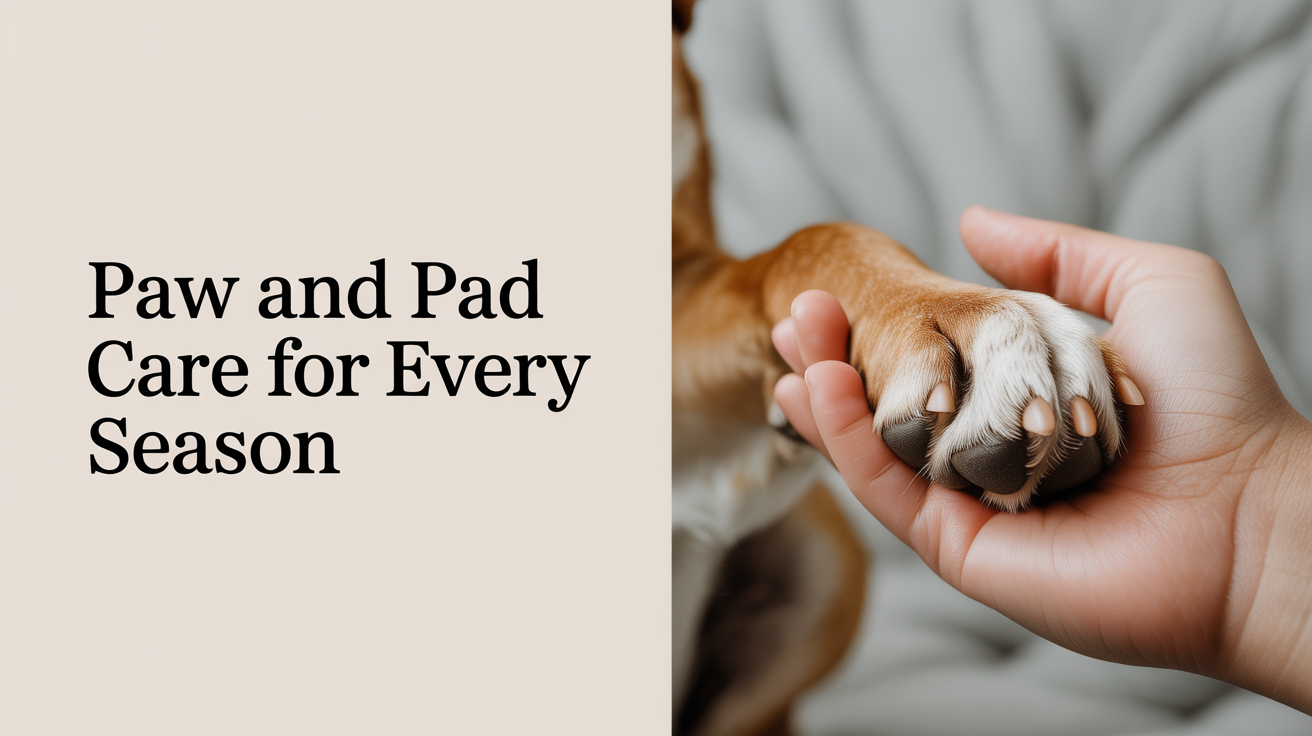
Dog paws take a beating in every season. Hot pavement in July, road salt in January, damp grass tracked indoors in autumn -- the pads are constantly working. Most dogs won't limp or whine until the damage is significant, so a little routine attention goes a long way toward catching problems early and keeping paws in good shape all year.
This guide walks through what healthy paws look like, the seasonal hazards worth knowing about, how to clean and inspect paws at home, and when a paw balm actually helps versus when the situation calls for a vet visit.
What Healthy Dog Paws Look Like
Before you can spot a problem, it helps to know the baseline. A healthy pad is firm, pliable, and slightly rough -- that texture is intentional. It gives dogs grip on most surfaces and some protection against abrasion. The color varies by dog: pink, black, brown, or mottled are all normal. What you don't want to see is deep cracking, peeling layers, raw or weeping skin, redness between the toes, or any swelling around the nail beds.
Run your hand lightly over each pad and check between the toes at least once a week. That habit catches small cuts, embedded debris (grass seeds and gravel are common culprits), or early signs of irritation before they become an actual injury. Pair this check with your regular grooming routine: the same session where you brush your dog's coat is a natural time to glance at the paws.
Pay attention to the fur between the toes too. On longer-coated dogs this hair can mat or collect ice balls in winter. Keeping it trimmed short makes both cleaning and inspections easier.
Spring and Summer Paw Hazards
Heat is the biggest warm-weather risk. Asphalt and concrete absorb sun and can reach temperatures that cause pad burns within a few minutes -- well before the air temperature feels dangerous to you. A simple test: press the back of your hand against the pavement for seven seconds. If it's uncomfortable for your hand, it's too hot for your dog's pads.
Walk your dog on grass or shaded paths during peak heat, or shift walks to early morning and evening. Boots designed for hot weather exist and some dogs tolerate them well, though many need several weeks of patience and positive reinforcement to accept them.
Other summer hazards include:
- Fertilizers and lawn chemicals. These can irritate pads and are toxic if licked off. Rinse paws after any walk where your dog's been on treated grass.
- Sand. Fine beach sand acts like sandpaper, and hot beach sand burns like pavement. Rinse thoroughly after the beach.
- Foxtails and grass seeds. These barbed seeds are common in late summer and work themselves between the toes and into the skin. Check between toe pads after any walk through dry grass.
If your dog suddenly starts licking a paw obsessively, check carefully for a splinter or embedded seed before assuming it's just a habit.
Fall and Winter Paw Protection
Cold weather brings its own set of challenges. The biggest one is ice-melt products: the salt and chemical blends used on sidewalks and roads are hard on pads and mildly toxic if ingested. Dogs often lick their paws after a walk, so rinsing before they get a chance to groom themselves is important.
Carry a small container of warm water and a towel for post-walk rinses, or keep a mat near the door so it becomes part of the routine. Wipe between the toes as well as across the pad surface, since that's where ice-melt residue collects.
Cracked dog paws are more common in winter. Cold, dry air pulls moisture out of the pads the same way it dries human hands. A dog who walks on heavily salted surfaces regularly is at higher risk. If you notice the pads look dull or the surface is starting to flake, that's the time to introduce a paw balm (more on that below).
Ice balls between the toes are another cold-weather annoyance. Dogs with longer paw hair are more prone to this. If your dog starts stopping and pawing at its feet mid-walk, that's often the cause. Keeping the inter-toe fur clipped short helps significantly. You can also apply a thin layer of paw balm before heading out; it reduces ice adhesion.
For dogs who will accept them, paw wax or booties offer the most complete winter paw protection. Start introducing boots indoors over a few sessions with treats before you expect them to work on a real walk. Many dogs eventually accept them; a few never do, and that's okay -- rinsing and balm go a long way.
How to Check and Clean Paws at Home
A post-walk paw check takes about two minutes once it becomes a routine. Hold each paw gently and work through these steps:
- Look at the pad surface for cuts, cracking, or anything embedded.
- Check between each toe for redness, swelling, odor, or debris.
- Feel along the nail base for any puffiness or discharge.
- Rinse off any visible dirt, salt, or chemical residue.
If your dog is resistant to having paws handled, work on this separately from actual cleaning sessions. Touch each paw briefly and reward with a treat, repeating daily until the dog is relaxed. Rushing through a check with a nervous dog teaches them to pull away; going slowly builds a dog who holds still.
For a thorough paw cleaning -- after a muddy walk, for instance -- a small bucket of lukewarm water works well. Some owners use silicone paw-washing cups that the dog steps into, which keeps the mess contained. Pat dry rather than rubbing, paying attention to the skin between the toes since trapped moisture there can lead to yeast overgrowth.
Full baths are a separate thing -- see this guide on bathing your dog at home for a complete walkthrough of that routine.
Treating Cracked Dog Paws with Paw Balm
Paw balm is worth having on hand, especially through the colder months. It moisturizes and protects dry, cracked pads and creates a mild barrier against salt and cold surfaces. Most are made from food-grade ingredients -- shea butter, beeswax, coconut oil, and similar -- because dogs inevitably lick their paws.
Apply a small amount to each pad after a walk, when the paws are clean and dry. Massage it in gently. Put socks on your dog for ten to fifteen minutes afterward if possible, which lets the balm absorb instead of getting licked off immediately. A light amount goes further than a thick coat.
What paw balm won't do: it won't heal a deep cut, clear an infection, or resolve cracking caused by an underlying condition like hyperkeratosis. If the pads are cracking severely, bleeding, or not improving after a week of consistent balm use, that's a reason to see your vet. Some dogs develop conditions that cause excessive pad thickening, and those need a proper diagnosis rather than home treatment.
Don't use human moisturizers on dog pads. Products designed for human skin can be too greasy and may contain ingredients that aren't safe for dogs to ingest.
When to Check Nails at the Same Time
Paw checks are a natural opportunity to assess nail length. Overgrown nails affect how a dog distributes weight across the pad and can cause discomfort or, over time, alter their gait. If you hear nails clicking on hard floors, they're ready for a trim. See the guide on trimming dog nails without the stress for a step-by-step method that keeps the process calm for both of you.
Frequently Asked Questions
How often should I apply paw balm to my dog?
During dry winter months or after heavy salt exposure, daily application after walks is reasonable. In warmer, milder weather, once or twice a week as a preventive measure is usually enough. If your dog's pads feel soft and smooth, you can back off. If they're looking dull or starting to flake, increase the frequency.
My dog keeps licking one paw constantly. Is that a paw care issue?
Sometimes, but not always. Obsessive licking of a single paw can signal a small cut, an embedded foreign object, or a nail-bed infection -- all things you'd notice during a careful paw check. It can also point to environmental allergies, which typically cause licking across multiple paws and between the toes. If you don't find any visible injury and the licking continues for more than a day or two, a vet visit is the practical next step.
Are dog boots worth the hassle?
For dogs who will wear them, yes -- especially on heavily salted winter surfaces or on very hot pavement. The main challenge is the time investment upfront to get a dog comfortable wearing them. If your dog resists boots after a genuine effort to introduce them, a consistent rinse-and-balm routine handles most of the same risks.
Can I use coconut oil on my dog's cracked pads?
Coconut oil is a common home remedy and is generally considered safe for dogs. It has some moisturizing properties, though it's less effective than a purpose-made paw balm with beeswax (which stays on longer). The main downside is that it absorbs quickly, smells appealing to dogs, and often gets licked off before it can do much. If it's what you have on hand, it won't hurt -- just don't count on it to fix a deeply cracked pad on its own.
How do I know if my dog's paw needs a vet visit versus home care?
Home care is fine for mild dryness, light surface cracking, or minor cuts that stop bleeding quickly and show no signs of infection. A vet is warranted if you see: a cut that's deep or won't stop bleeding, any puffiness or discharge around the nails or between the toes, a limping dog with no obvious explanation, pads that are cracking severely and not responding to balm, or a dog that's in visible pain when the paw is touched. When in doubt, it's worth a call to your vet.