Gear & Essentials
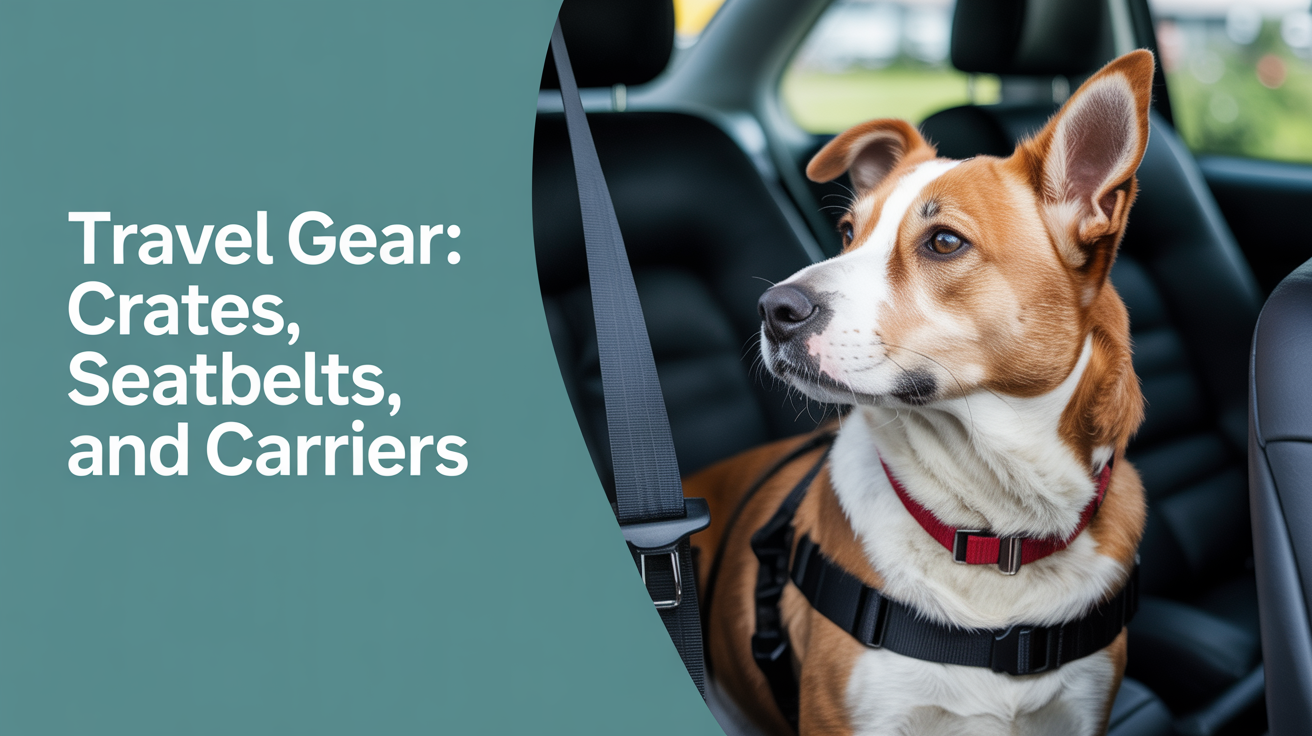
Travel Gear: Crates, Seatbelts, and Carriers
A practical guide to dog car travel safety: choosing between travel crates, seatbelt harnesses, and carriers so every ride is safer for your dog and you.
Most dogs love car rides. Some barely tolerate them. Either way, an unrestrained dog in a moving vehicle is a safety problem: for the dog, for you, and for anyone else on the road. A 60-pound dog in a 30 mph collision generates several hundred pounds of force. That's not a number to argue with.
The good news is that the three main options for dog car travel safety are straightforward once you understand what each one does well and where it falls short. This guide walks through travel crates, seatbelt harnesses, and carriers, explains how to choose between them, and covers what to do if your dog gets car sick.
Why Restraint Matters in the Car
An unsecured dog can become a projectile in a crash or even a hard stop. That risk alone is reason enough to use some form of restraint. But there are two other practical reasons that come up long before any emergency.
First, a dog roaming the back seat or climbing into the front is a distraction. Even a calm dog nudging your elbow at the wrong moment is a problem. Second, in many places, driving with an unrestrained animal is technically a traffic violation. Whether or not enforcement is common, it is worth knowing.
Beyond safety, restraint also helps anxious dogs. A crate or carrier that a dog already associates with rest and calm at home can make the car feel less chaotic. This is especially true for dogs who pace, whine, or get worked up in an open back seat.
The Three Main Options
Travel Crates
A rigid travel crate is the most protective option in a crash. Crates distribute impact forces across a larger surface area, and a well-secured crate keeps a dog contained even if the crate itself moves. Airline-approved hard-shell crates are built to a higher standard than basic plastic kennels, and crash-tested crates built specifically for vehicle use offer the highest protection.
The tradeoffs: crates take up significant space, especially for larger dogs, and they need to be properly anchored. A crate sliding around in the cargo area is not much better than no crate at all. Use cargo straps or purpose-built vehicle anchors to keep it in place.
If your dog already has a crate they sleep in at home, a travel crate with the same feel will be easier to introduce. See the guide to choosing crate size and type for help sizing correctly, since an oversized crate gives a dog too much room to be thrown around inside during a stop.
Seatbelt Harnesses
A seatbelt harness attaches to the car's existing seatbelt buckle via a short tether. Your dog sits or lies on the back seat in their harness, with movement restricted to a small radius.
The key here is that not all harnesses are equivalent. The harness needs to be a genuine travel harness designed to spread crash forces across the chest and shoulders, not a walking harness clipped to a tether. Walking harnesses are not built for the loads that occur in a collision and can cause serious injury if they fail. Look for harnesses that have been independently crash-tested rather than those that simply claim to be "car safe."
A good travel harness pairs well with a well-fitted regular harness for walks. The skills transfer. If you are still working out how to size and fit a harness for daily use, the how-to guide on choosing and fitting a dog harness covers the key fit points that apply to travel harnesses as well.
Carriers
Carriers are best suited to small dogs and puppies. A soft or hard-shell carrier on the back seat (seat-belted in place through the carrier's built-in loop) keeps a small dog contained without taking up the whole cargo area.
For dogs under about 20 pounds, a well-fitted carrier can be just as safe as a crate, and it is easier to carry in and out of the vehicle. For larger dogs, carriers do not offer meaningful crash protection and should not be used as the primary restraint.
A carrier your dog already uses at home as a bed or resting spot will be far less stressful in the car. The more familiar the space, the better. If you are thinking about how a carrier fits into your dog's overall setup alongside a crate and a bed, it helps to have all three pieces thought through together. The guide to picking a dog bed that lasts covers what to look for in resting surfaces, which overlaps with what makes a carrier comfortable for longer trips.
Choosing the Right Setup for Your Dog
There is no single right answer. The best option depends on your dog's size, temperament, and how your vehicle is set up.
Dog size and weight is the first filter. Dogs over 40 pounds are generally best in a crash-tested crate. Dogs under 20 pounds do well in a carrier. Mid-size dogs (20 to 40 pounds) can go either way, depending on how your vehicle is configured and how well the dog accepts each option.
Temperament matters a lot. A dog who already rests calmly in a crate at home will likely settle in a travel crate faster than one who has never been crated. A dog who is comfortable wearing a harness for walks will adapt to a travel harness more easily. Match the restraint to what your dog already knows.
Vehicle type shapes what is practical. A hatchback or SUV with a cargo area is well-suited to a crate. A sedan with limited trunk space may make a harness the more realistic choice. Small cars often work best with a carrier for small dogs.
Trip length is worth considering. For short trips across town, almost any safe restraint will work. For longer drives, a crate or carrier your dog can comfortably lie down in is more comfortable than being tethered in one spot for hours.
Managing Car Sickness in Dogs
Car sickness is common, especially in puppies, whose inner ear is still developing. It can also affect adult dogs who were never desensitized to car travel when young. Signs include drooling, yawning repeatedly, appearing unsettled, whining, and eventually vomiting.
A few practical things help:
Keep the car cool. Heat makes nausea worse. Air conditioning or cracking a window to equalize pressure inside the vehicle often reduces symptoms.
Face the dog forward. Side-facing and backward movement tends to be harder on the vestibular system. If your dog's crate or carrier allows it, orient them so they are facing the direction of travel.
Skip feeding before a trip. A dog with an empty stomach is less likely to vomit. For short trips, hold food for a few hours beforehand. For longer trips, feed a small meal, wait at least two hours, and plan rest stops.
Start with very short rides. A dog who gets sick every time they are in the car can often be desensitized with trips that are only a few minutes long, then gradually lengthened as they learn that car rides end without incident. Pair trips with destinations the dog likes, not just vet visits.
Talk to your vet if it persists. Prescription anti-nausea medication for dogs exists and is safe when used correctly. If your dog is miserable on every car trip, it is worth a conversation with your vet rather than just hoping they grow out of it.
Getting a Reluctant Dog Comfortable in the Car
Some dogs are fine in the car from the start. Others need a proper introduction. The pattern that works is the same one used for crate training: go slowly, make it positive, and never push a dog past their threshold.
Start with the car parked and off. Let the dog sniff around the vehicle, eat treats near it, and eventually hop in and out on their own terms. Then move to sitting in the car with the engine on but not moving. Then short drives around the block. Build from there.
If your dog's reluctance seems more like genuine anxiety than simply unfamiliarity, that is worth separating. A dog who panics in the car may need a more structured desensitization plan, possibly with help from a trainer or vet. Car anxiety and separation anxiety can sometimes overlap in dogs who are also distressed when left alone.
Frequently Asked Questions
Does a seatbelt harness really protect my dog in a crash?
It depends on the product. A properly crash-tested travel harness will significantly reduce the risk of your dog becoming a projectile and suffering serious injury. An untested harness or a walking harness with a clip-on tether may hold your dog in place under normal driving conditions but could fail or cause injury in a crash. The crash-test rating is what matters, not the marketing language on the packaging.
Can I put my dog in the front seat?
It is not recommended. Passenger-side airbags can seriously injure or kill a dog in a collision, even a relatively minor one. The back seat is safer. If your vehicle has a back-seat-only configuration that makes this unavoidable for some reason, make sure your dog is secured away from the airbag deployment zone.
My dog has always ridden loose. Why change now?
Unrestrained dogs are safe until they are not. Most car trips end without incident. But the risk is real and the fix is straightforward. A dog who has always ridden loose may resist a crate or harness at first, but most adapt within a few weeks of consistent use.
What is the difference between a travel crate and a regular crate?
A regular plastic kennel is not built for crash forces. Travel crates designed for vehicles, and especially crash-tested crates, use thicker walls, reinforced doors, and designs that absorb impact better. They are worth the price difference if you drive with your dog regularly.
My dog gets car sick. Will a crate make it worse?
Not necessarily. For some dogs, the enclosed, den-like feel of a crate is actually calming and reduces anxiety-related nausea. For others, reduced visual access to the horizon can make motion sickness worse. If your dog gets sick in a crate, try a harness-and-seatbelt setup that lets them see out the window, and see whether that improves things.