Grooming & Coat Care
Why Your Dog Smells Bad Again Just a Day After a Full Bath
Bathed your dog yesterday and the smell is already back? Here's how to work through the real causes, from anal glands to skin infections to over-bathing.
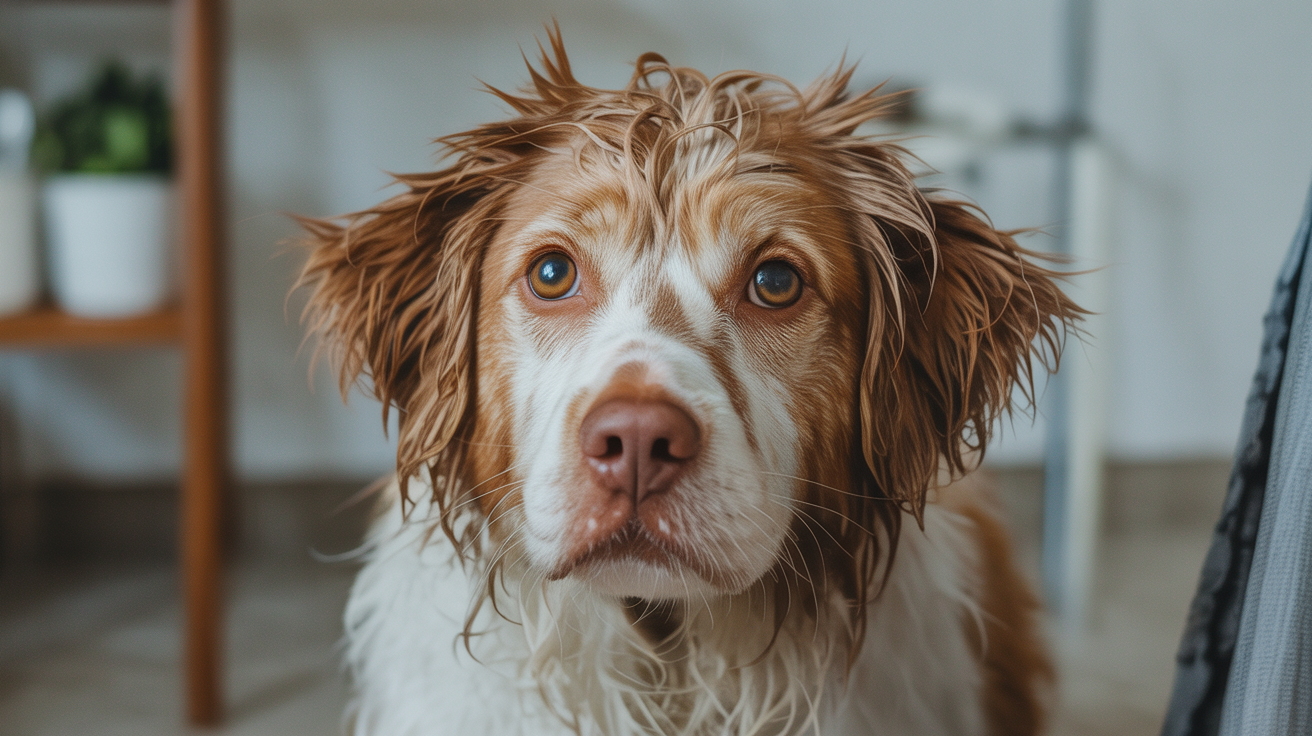
You spent twenty minutes wrestling a wet dog into submission, used a full bottle of shampoo, and by the next evening the couch cushion he's lying on smells like it needs its own bath. If your dog smells bad after a bath that seemed to work fine, you're not doing anything wrong with the washing itself. Something else is producing the odor, and a bath only handles what's on the coat, not what's underneath it.
Dog odor causes follow a fairly predictable order of likelihood. Most owners can narrow it down at home in a few minutes by checking three or four specific spots, without reaching for a fragrance spray that just masks the problem for another few hours.
The Usual Suspects, Ranked by Likelihood
Before assuming something serious is wrong, work through these in order. The first two account for the vast majority of "clean dog, dirty smell" complaints.
Overdue Anal Glands
This is the most common cause owners miss, partly because it's unpleasant to think about. Dogs have two small glands just inside the anus that release a strong, fishy, musky scent, normally in tiny amounts when they poop. When the glands don't empty fully on their own, which happens more in smaller breeds and dogs with softer stool, they build up and leak a little at a time, especially when your dog is lying down or has just gotten up. That smell clings to fur and bedding and has nothing to do with how recently you bathed him. A fishy odor radiating from the back half of your dog, rather than his coat generally, is the first thing to rule out. A groomer or vet can express the glands in under a minute at a routine visit.
Ear or Skin Infection
Ears are the second most likely culprit, and easy to overlook since a bath doesn't get water down into the canal (nor should it). A yeast or bacterial ear infection produces a musty, sweet, or old-cheese smell that doesn't wash away, because the source is inside the ear, not on it. Skin infections work the same way: a hot spot or a fold of skin that stays damp can smell sour within a day of an otherwise clean bath, because bacteria and yeast are living on skin the water never really reached.
Oily, Sebum-Heavy Double Coats
Some dogs, regardless of breed, produce sebum quickly. Sebum is the natural oil that keeps skin and coat conditioned, and dogs with dense double coats or naturally oily skin can smell noticeably "doggy" again within a day or two of a bath simply because their skin is doing what it's supposed to do, just faster than a dry-coated dog's. This isn't a problem to fix so much as a trait to manage with the right shampoo and a sensible schedule, covered below.
Diet
What goes in affects what comes out. A diet that's too rich, or one that just doesn't agree with your dog, can cause loose stool, mild skin inflammation, or generalized body odor that a bath doesn't touch. This is usually the least likely explanation on its own, but worth a look if odor has been a longer-term pattern rather than a one-off, especially alongside soft stool or itchy skin.
An Incomplete Bath
Finally, consider the bath itself. Shampoo residue left in a thick coat can trap dirt and oil and smell worse than no shampoo at all. Just as often, the problem is drying, not washing: a dense undercoat that stays damp for hours holds moisture against the skin, and damp skin is exactly what yeast and bacteria like best. A coat that looks dry on the outer guard hairs can still be soaked underneath. Our full walkthrough of a low-stress bathing routine covers rinsing and drying in more detail if you want to check your technique against it.
A Simple Checklist to Narrow Down the Cause
Work through this in order. It takes about five minutes and rules out most of the causes above.
| Check | What you're looking for | What it suggests |
|---|---|---|
| Base of the tail and under the tail | Fishy, musky odor, sometimes a visible discharge | Anal gland buildup |
| Inside both ears | Musty, sweet, or yeasty smell; redness, dark discharge, or head shaking | Ear infection |
| Skin folds, armpits, and between paw pads | Sour or yeasty smell, redness, dampness, or greasy fur | Localized skin or yeast infection |
| Run a hand through the coat down to the skin | Overall oiliness, especially along the back and neck | Sebum production, possibly needing a different shampoo |
| Recall the bath itself | Did you rinse until the water ran clear? Was the undercoat fully dry within a few hours? | Residue or trapped moisture |
If the ears turn up anything unusual, it's worth learning to check and clean them properly rather than guessing. Our guide to cleaning your dog's ears safely walks through what's normal wax versus what's a sign of infection.
When It's a Vet Visit, Not Another Bath
Most of the causes above respond fine to an adjusted grooming routine. A few signs mean you should stop troubleshooting at home and call your vet instead:
- A yeasty or "corn chip" smell from the paws or skin that persists for more than a few days
- Ear odor combined with head shaking, scratching, tilting, or visible discharge
- Red, inflamed, or scabbed skin anywhere the odor is concentrated
- A smell that gets stronger rather than better over a week, regardless of bathing
- Anal gland issues that recur every few weeks even with regular expression
A vet can look at a swab under a microscope and tell you in minutes whether you're dealing with yeast, bacteria, or something else, which beats another round of guessing shampoos.
Could You Be Bathing Too Often?
It's a reasonable instinct to bathe more when your dog smells bad, but this can backfire. Shampoo, even a gentle one, strips away some of the natural oils that keep skin healthy. Wash too often and skin can respond by producing oil faster to compensate, so a dog bathed every few days sometimes ends up smelling "doggy" sooner, not later.
For most healthy adult dogs, once every four to six weeks is a sensible default. A dog who swims often or rolls in things he shouldn't will need more frequent baths; one with dry, flaky skin may do better stretched to six or eight weeks with a moisturizing shampoo in between. Dogs under vet-prescribed medicated baths for a skin condition are the exception, and that guidance takes priority over any general rule.
Between baths, regular brushing does more for coat health and odor control than most owners expect. Brushing distributes natural oils evenly through the coat instead of letting them concentrate near the skin, and it pulls out loose fur and debris before they build up. If shedding or a dull, dry coat has been part of the picture, our guide on reducing shedding and maintaining a healthy coat covers brushing tools and frequency by coat type.
Two More Things Worth Checking
If your checklist points back to the bath routine rather than a health issue, two details are easy to miss.
First, matting. If your dog has any mats, especially around the collar, behind the ears, or in the armpits, water and shampoo can get trapped inside and stay damp for days, which will smell no matter how thorough the bath was. Mats need to be worked out gently before or during a bath, not after. Our guide to dealing with matted fur the gentle way covers a method that doesn't involve cutting skin by accident.
Second, shampoo choice. A formula suited to oily, double-coated breeds behaves differently than one meant for dry, sensitive skin, and using the wrong one can leave residue or dry the coat out faster than it should.
Frequently Asked Questions
Is it normal for a dog to smell within a day of a bath?
A very faint return of normal "dog smell" within a day or two isn't unusual, especially for oily-coated breeds, since sebum production doesn't stop just because you washed it away. A strong, noticeable odor that quickly matches or exceeds the pre-bath smell usually points to one of the causes above rather than normal coat chemistry.
My dog's ears smell bad but he isn't scratching them. Could it still be an infection?
Yes. Some dogs don't show obvious discomfort even with a real infection going on. A musty or yeasty ear smell is worth a look regardless of whether your dog seems bothered, since infections tend to get harder to treat the longer they sit.
Can diet really cause body odor in a healthy dog?
It can, though it's usually more subtle than the other causes. A food that's too rich or doesn't agree with your dog can produce stronger overall odor and sometimes itchy or oily skin. If odor has been a persistent, months-long issue, it's reasonable to mention diet to your vet as one possibility among several.
How do I know if it's a yeast infection versus just oily skin?
Oily skin smells fairly uniform across the coat and feels greasy without redness. A yeast infection tends to be localized (paws, ears, skin folds, the base of the tail), smells sweeter, and often comes with redness or licking at the area. When in doubt, a quick vet visit settles it.
Should I switch shampoos if the smell keeps coming back?
Only after you've ruled out anal glands, ears, and skin issues first. A shampoo mismatch is real, particularly for oily or double-coated dogs, but switching products repeatedly without addressing an underlying infection just delays a fix your vet could confirm in one visit.